Why it makes sense to have a Plan B in place
The ₿ plan is more than just a theory for bitcoiners - it's a practical and important concept that resonates with our values and goals. As bitcoiners, we often face the challenges and uncertainties of the current financial system, and this is where Plan ₿ emerges as a key alternative. It can change not only the way we perceive money, but also how we prepare for potential crises. So, if you are looking for a tool that will help you in times of uncertainty, not only financially but also practically in your daily life, read on.

Why does it make sense to have a ₿ plan in place?
This concept is not just for a small group of insiders, but for anyone trying to find a path to greater independence, personal sovereignty and autonomy. I deliberately do not use the word "freedom" because it has many levels. Of course, with greater freedom comes greater responsibility for one's own actions, which is why I find it more apt to use the word "autonomy".
For many of us in the bitcoin community, freedom and sovereignty are cornerstones of our philosophy. Bitcoin is not just about decentralization, but also about personal freedom - the freedom to make decisions about our own lives, finances, and futures without dependence on central authorities and states that can manipulate our lives and resources. However, this type of freedom comes with responsibility, which is why it is more accurate to use the word 'autonomy' in this context. As we become sovereign, we accept full responsibility for our actions, decisions and their consequences.
For bitcoiners, this aspect is particularly strongly expressed, because in using bitcoin we accept not only the possibility of dispensing with trust in any central custodian, but also the responsibility for our own security - whether in digital or physical space - as well as asset management and privacy. We cannot blame “someone else” for the loss of our funds or mistakes we make. This responsibility forces us to be disciplined, informed and prepared because we know that if we fail, there will be no one to save us.
Freedom without responsibility would be an illusion. True freedom comes only when we are prepared to bear the consequences of our decisions, no matter how difficult or uncomfortable they may be.
Having Plan ₿ and having the issue of physical and financial freedom resolved is definitely a strategic advantage in the 21st century. What most people desire above all else is to preserve their freedom in life - for themselves and their families. It's a core value that many take for granted until they begin to think more deeply about the real state of affairs.
The year is 2025. For many people living in Europe or the United States, everything seems to be running smoothly. They live a quiet, ‘normal’ life, surrounded by apparent order and stability. However, if we look beneath the surface and start to critically examine the reality around us, it may turn out that freedom as we know it is often an illusion. In reality, many basic rights and safeguards are increasingly being curtailed and the world is heading towards an increasingly complex and less free future.
💣 Self sovereign plan:
✅bitcoin
✅bitcoin node
✅multiple residencies
✅0% tax residency
✅multiple passports
✅diversified bank accounts
✅disregarded LLC US company
✅taking care of your body
✅understand opsec
✅be open minded
It is in such a situation that it makes sense to think ahead, make backup plans and stay prepared for the unexpected.
I will offer you some topics to think about:
- Freedom of expression, whether online or off, is increasingly being restricted.
- Corrupt media - often becoming a tool to push an “official” agenda instead of objective reporting.
- Regulation - just look around the EU, where rules and restrictions are constantly increasing and interfering with everyday life.
- Surveillance - from financial transactions to online behaviour, our actions are constantly monitored.
- Collecting personal data - not only governments but also corporations are actively collecting your data. This data is either used directly or can be used or sold at any time in the future, without regard for your privacy.
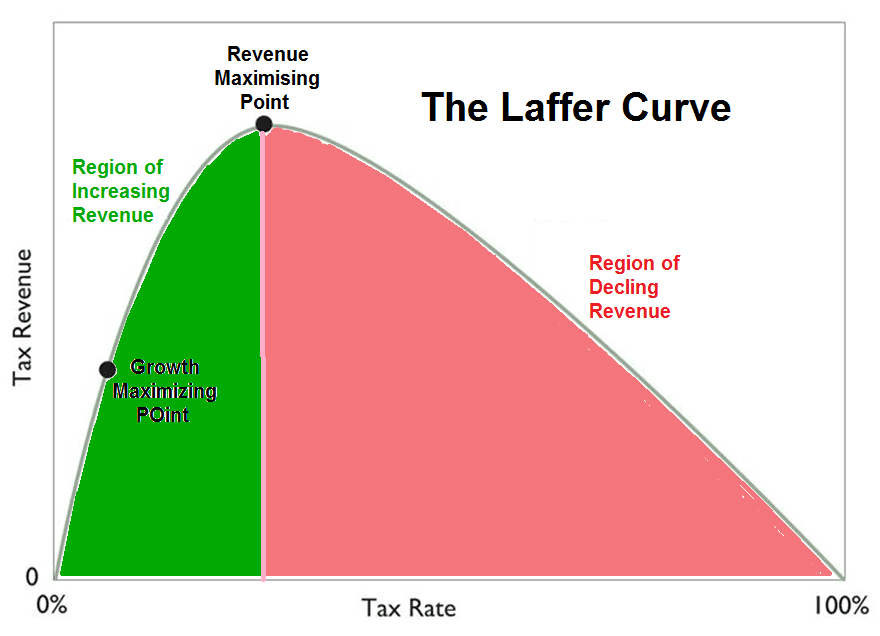
- Deteriorating income-to-spending ratios - more and more people are struggling with the fact that income is not keeping up with rising expenses. Which is mainly due to the disproportionate tax burden in the western world so that governments can fund their irresponsible “shenanigans”. You can see below what happens then with irresponsible tax hikes. The only thing it causes is that capable productive people building their businesses subsequently decide to leave these territories. And yes, these people have the financial means to do so, thanks to their work, intellect or risk-taking.
Flag theory is a strategy to optimize personal freedom by diversifying activities into different states. Individuals "plant" their flags in different countries according to their advantages, such as housing, business, banking, or citizenship, to maximize their advantages and minimize the influence of government regulations.
Some might argue that there is nothing to worry about. But just look back in history. Take Germany before the Second World War - back then, most people could not imagine that anything could go wrong. The sharing of personal data, for example on religious beliefs, seemed perfectly innocent. Yet the situation has changed dramatically.
Similar scenarios may play out in the future, and what exactly that will be, we cannot imagine today. We need only go back a few years, to the pandemic. Suddenly, borders were closed, movement and access to certain areas were restricted, and the freedom we took for granted was largely gone. Interestingly, these restrictions apparently did not apply to those who could fly on private jets.
We could go on, but I think you get the point.
It is not an ideal situation, but can anything be done about it? I believe it can to some extent. Let's take it one step at a time. The key part is to ensure global mobility and the ability to maintain freedom regardless of the circumstances. It's also about keeping your family safe should the situation deteriorate.

Flag theory is a strategy to optimize personal freedom by diversifying activities into different states. Individuals "plant" their flags in different countries according to their advantages, such as housing, business, banking, or citizenship, to maximize their advantages and minimize the influence of government regulations.
One approach to achieving this is the principle of flag theory. It aims to minimise dependence on one system and maximise freedom and decentralisation. In practice, this means spreading our assets, capabilities and resources over multiple locations so that any problems in one jurisdiction have the least impact on our lives. In other words, it is not about putting all our eggs in one basket, but diversifying and ensuring a free and flexible life with as much control and risk identification as possible. We have made a whole video series with Honza about this topic, PLAN B, but it is not over and we are still preparing new content, because as in any topic, it is necessary to have up-to-date information, to keep a finger on the "pulse of the times" and at the same time to understand the different mental settings of people.
Permanent residency
Permanent and tax residency are 2 separate institutes. Physical residence is where you have the right to live. Tax residency is where you pay taxes. And these 2 institutes do not always have to be identical. On the other hand, many countries have conditions that if you are a tax resident, you must also physically live in that country, which is why the 2 concepts are often confused.
However, there are also countries that do not require permanent residence in their territory to obtain the status of tax resident. This opens up a wider range of options when choosing the location that best suits your needs and preferences. It should be mentioned here that meeting the tax residency requirements of the country of your choice does not automatically mean the end of tax residency in the country of origin. This topic is quite complex and I will try to outline it later in the paragraph on tax residency.
Permanent residence, also known as permanent residency, allows you to stay in a given territory for an unlimited period of time. The advantage is that you can have multiple permanent residences at the same time, as long as you are able to meet the conditions for maintaining them. And therein lies the key - each country has its own specifics and rules for maintaining permanent residency, often requiring you to spend a certain amount of the year in their territory. If you don't meet these conditions, you could lose your residency status.
However, there are very few countries with simple or almost no requirements to maintain a residence. When getting permanent residency, it is important not to put yourself in a situation where you become their "slave" - that is, to live only because you have to meet the requirements of all the countries you have chosen. It is therefore wise to consider carefully where you are comfortable living and where the conditions for maintaining residency are easy to meet.
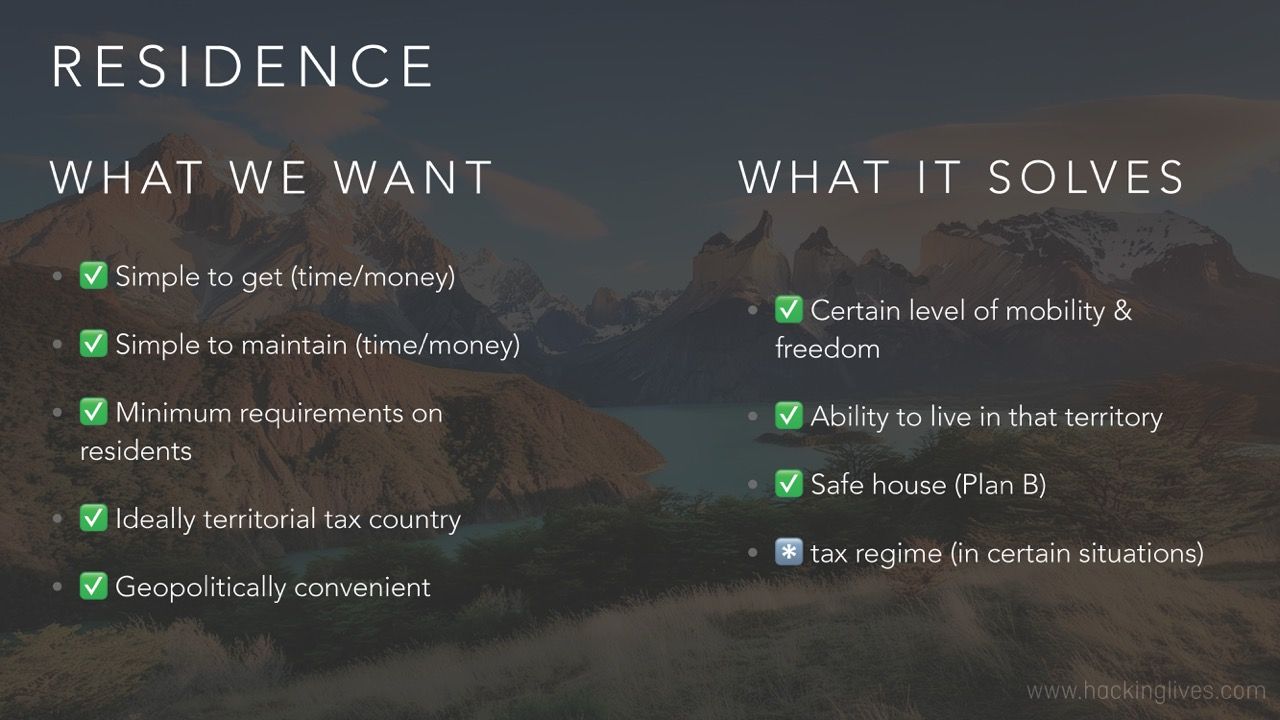
What we want from a permanent residence and what a permanent residence solves for our lives.
Permanent residence can be the first step towards greater personal freedom. It brings benefits such as permission to stay in a given territory, resident status, which can include various benefits (depending on the country), and of course certain obligations (there are countries that do not have obligations). Some countries, such as members of the Mercosur grouping, also offer the benefits of free movement between their Member States without the need for a passport, thanks to permanent residence. This flexibility can be useful if you lose your passport, for example - permanent residency still allows you to travel within the region without a passport.
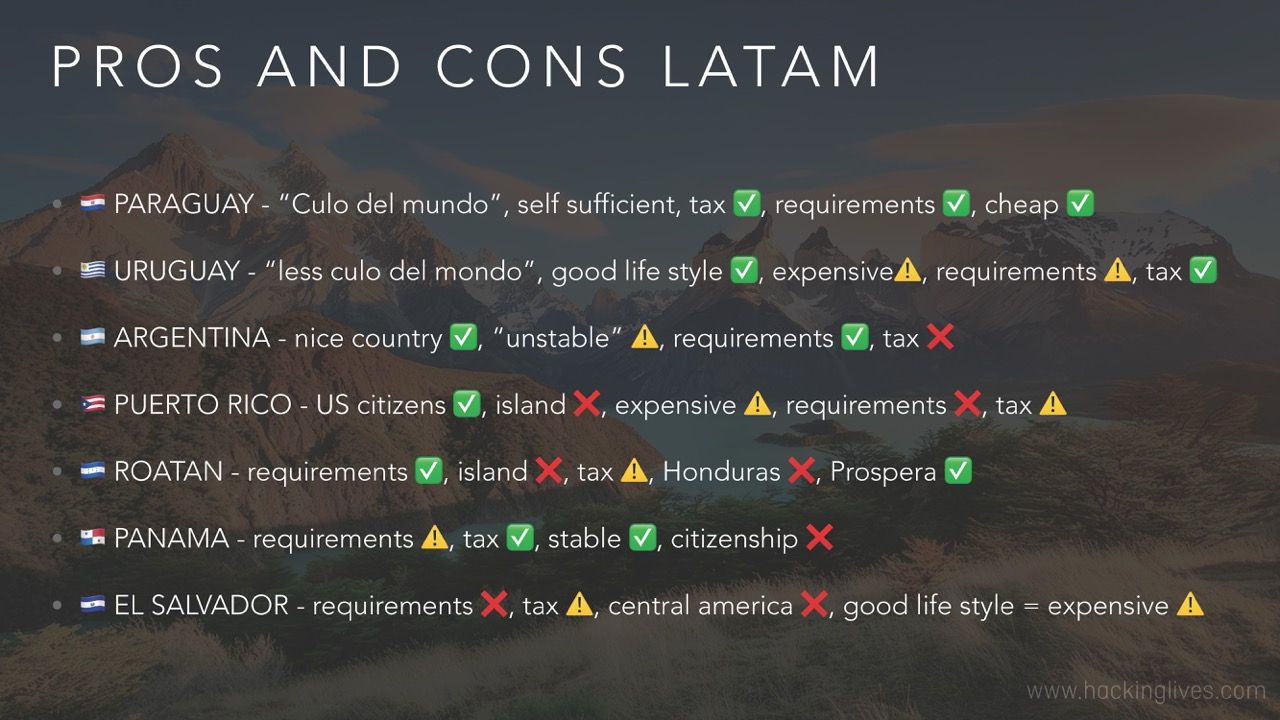
Very simplified basic pros and cons of each country within Latin America.
On the other hand, permanent residency does not solve the issue of global mobility. An immigration card and an ID card are not a passport, and therefore permanent residency has its limits in terms of free movement around the world.
However, obtaining permanent residency is a relatively simple process, both in terms of time and finances. This represents a significant advantage over obtaining citizenship and a passport, which is much more challenging. It could be said that obtaining permanent residency and obtaining a passport are like two different sports - each has its own specific requirements and rules. In the following paragraphs we will look at the issue of citizenship and one of its main advantages, the passport.

Freedom of movement, which I like to refer to as "onion skins". Your goal is to get to point 4, ideally point 5.
How to choose a suitable permanent residence?
- The country where you want to live long-term - Choose a country you like and where you want to spend most of your time. The ideal choice is a country that also has a territorial or zero tax system.
- Backup Plan - In addition to your primary place of residence, it is wise to have a ₿ Plan in place - that is, permission to stay in another country that has minimal or no requirements to maintain residency. This will give you insurance in case you need to leave your main country. Prime candidates include Paraguay, Panama. Paraguay is easier, faster, cheaper and more interesting for many different reasons. Of course, this would not apply if Paraguay or Panama is your main Plan A.
- Parallel Plans B - If your situation allows, consider multiple backup plans simultaneously and keep them active. However, this step is more appropriate for those who are more experienced with a similar approach. For beginners, it may be better to focus on one quality solution and gradually gain more experience.
Deciding on a permanent residence requires a thoughtful approach that fits your needs and long-term goals. We covered more on this topic in the podcast above.
Tax residence
The topic of tax residency is often discussed and questions on this topic are constantly recurring. However, it is important to remember that this is a very individual matter and it is difficult to generalise. There is no universal or completely simple solution.
In theory, it is easy to fail to meet two basic conditions for tax residency in the Czech Republic:
- Not spending more than 183 days a year in the Czech Republic.
- Not having a permanent apartment in the territory. In other words, not having a place to return to.
- The obvious condition is not to be self-employed or employed in the territory.
What are the options?
- Move to a zero-tax or territorial country - The key word here is "move", which means actually living in that country for more than 183 days a year, not just establishing a formal address. It is important not to confuse physical residency with tax residency.
- Life on the move - Spend your life "travelling" and ensure that no country considers you a tax resident. In most jurisdictions this means spending no more than 183 days a year there, or in other words, even if you are not actively traveling, live in at least 2 countries for up to 180 days each. However, this option is not for everyone.
- Complex legal structures - Resolve tax issues through more complex legal structures. However, this is better suited for more advanced plans that require expertise and often higher funding to make sense.
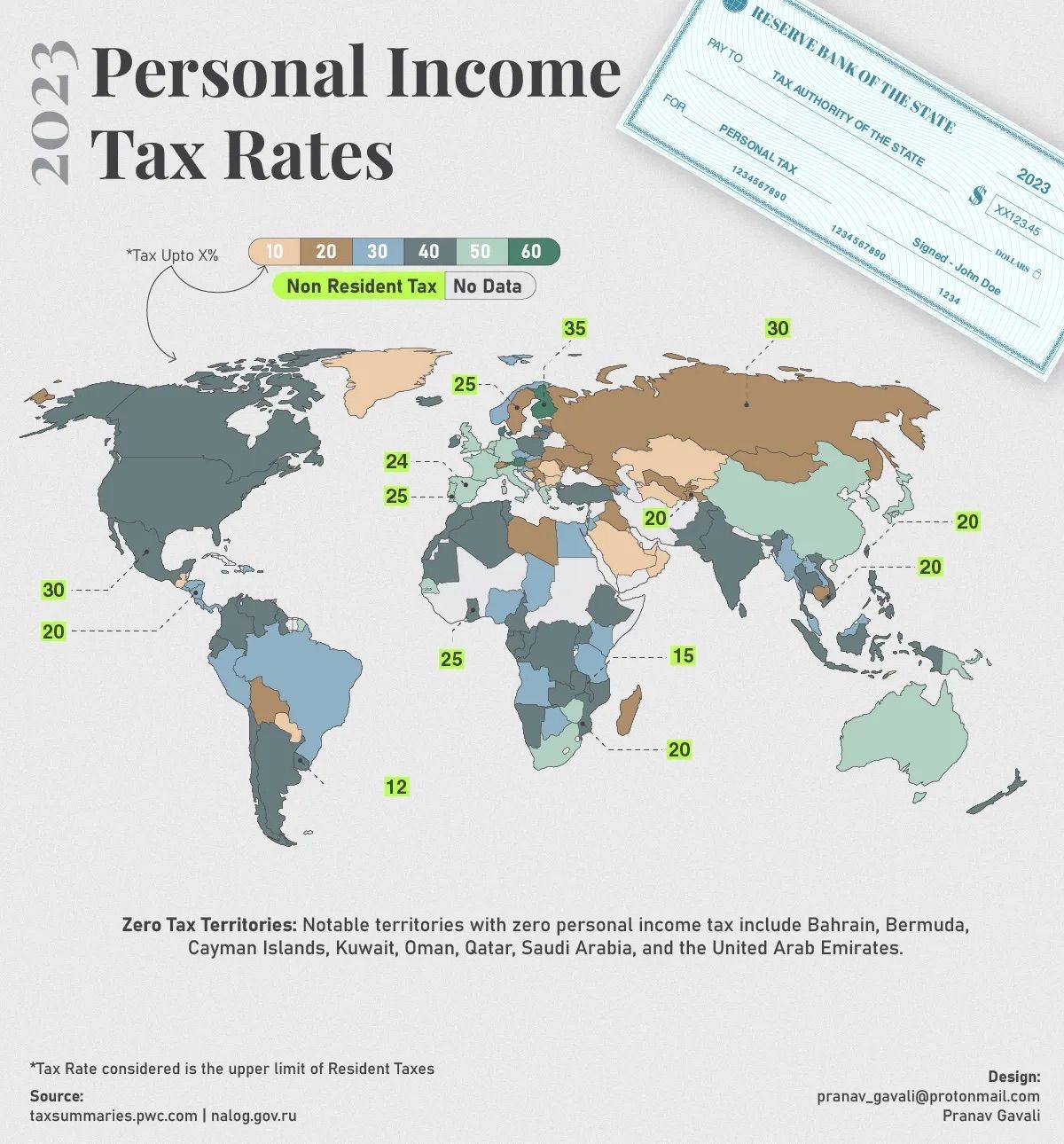
Income tax for individuals. Note: The figure does not take into account the territorial taxation of individual countries.
Since this article focuses on the ₿ Plan, let's stick to that topic. We will leave optimization at the global level for another article.
Citizenship
Getting a second citizenship is usually a good move. You get the legal protection of another country, access to consular services abroad, etc. If you have the opportunity to get a second passport, you should definitely take it. Generally speaking, if you have an easy path to getting a second citizenship, you shouldn't think too much about it and take advantage of it (unless the country of second citizenship imposes conditions on you that you're not comfortable with).
It's important to think about which citizenship you want to get and which you'd rather avoid. Equally, it's good to know which two citizenships complement each other well and which could be problematic if you take them at the same time. It's a bit like "global chess" where knowing the rules and details is key.
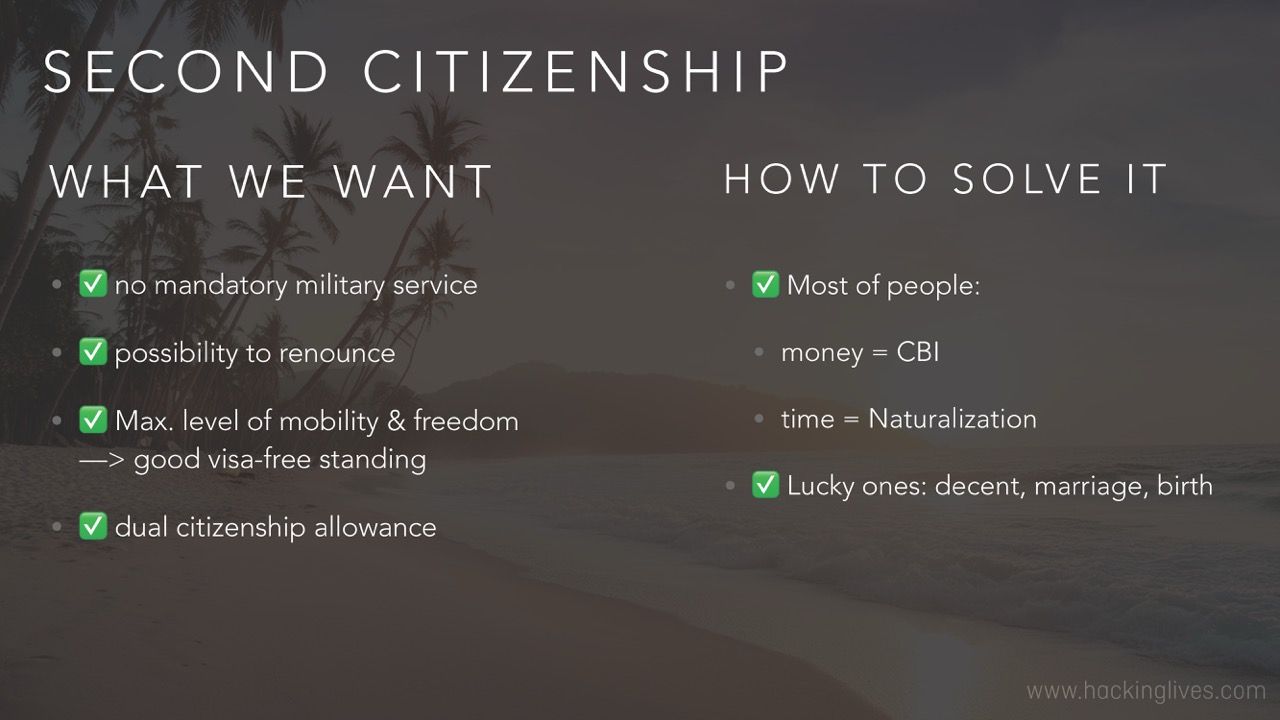
What we want from a second citizenship and how to get a second citizenship.
There's a saying that goes, "The devil is in the details" - and it's doubly true here.
For example, not all countries give naturalized citizens the same benefits as those who have acquired citizenship by birth. We could write a whole book on the exceptions, specifics, differences and complexities - but it would probably bore you to death. So we'll simplify the topic and break it down into only the basic groups:
The first possibility is the origin
Getting citizenship in the EU is definitely advantageous. European passports still have a strong position on the world market and citizenship of most European countries carries with it almost no obligations (an exception may now be France, which is deciding to introduce a citizenship-based tax method). EU countries are governed by the principle of "jus sanguinis", which means that citizenship is not automatically granted just on the basis of birth on their territory. You must have parents (or ancestors, such as grandparents) with citizenship of that country.
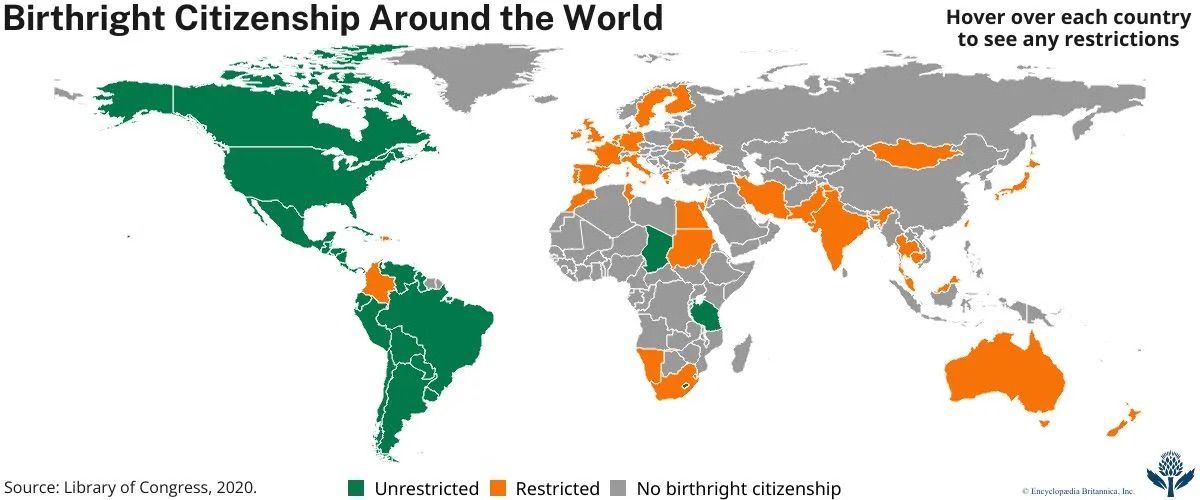
Countries where it is possible to acquire citizenship by birth vs. countries that do not have this right.
If you already have one EU passport, you don't necessarily need to apply for a second one. It mainly depends on how difficult it would be for you to get another passport within the EU. Otherwise, it is often more sensible to focus on countries outside the EU that may offer benefits to offset the restrictions associated with the EU or in case something goes wrong in the EU. Unfortunately, this scenario of a worsening trend in the EU is increasingly likely (see the ideas of France mentioned above). Another area that I find very interesting from a citizenship perspective is Mercosur, which includes countries like Brazil, Argentina, Chile, Uruguay and Paraguay and other associated surrounding countries. Having both EU citizenship and citizenship in one of these countries can be a great idea, especially looking to the future.
Another option is to obtain citizenship by investment (CBI)
CBI (Citizenship by Investment) is the process of acquiring citizenship through investment. This usually involves investing in real estate, donating a certain amount of money to the country or investing in government bonds for several years. The process is relatively simple and citizenship can be obtained within 6 to 12 months without having to physically visit the country. Examples of countries that offer this program include St. Kitts and Nevis, Dominica, St. Lucia, Antigua and Barbuda, Vanuatu, Turkey (currently very popular) and others.
However, due to recent events and the EU's approach to these destinations, CBI programs have become significantly more expensive, resulting in price increases of over 100%. Currently, CBI programmes are priced at around USD 250,000 if donated, with real estate or government bond investments typically requiring double that amount. However, terms and prices can vary specifically by destination.
The Fastest Citizenships For Sale🫰 Right Now:
Based on 15 sources (see comment).
🇻🇺Vanuatu: 3.3 months
🇹🇷Turkey: 6.2
🇩🇲Dominica: 7.1
🇦🇬Antigua: 7.6
🇱🇨St. Lucia: 8.6
🇬🇩Grenada: 9.5
🇪🇬Egypt: 10
🇰🇳St. Kitts & N.: 11.4
However, if you don't need to get citizenship quickly and have time, there are other, cheaper options. However, you must take into account that in this case you will pay in time.
The third option is to acquire citizenship by marriage
Obtaining citizenship through marriage is a faster way to obtain citizenship, which is advantageous for those who have this option. If you have this opportunity, take advantage of it, because in selected countries you can go through an accelerated process known as fast-track. Not all countries offer this option, but most allow the process to be accelerated, especially through marriage, which in some cases can lead to citizenship after just two years.
The fourth option is citizenship by naturalisation
Naturalisation is one of the cheapest ways to gain citizenship. This process requires moving to and staying in a new country. It is closely related to the previous points on residence and tax residency, as in this case your presence and tax status play a key role in obtaining citizenship.
Essentially, you move to a new country and start a new life here. Step by step, you get a residence permit, live in the country and later on you can become naturalised. The length of this process varies, and can take anywhere from 2 years to several decades, depending on the country in which you decide to apply for citizenship. An example is Paraguay, where you can apply for citizenship after 3 years of living in the country of permanent residence.
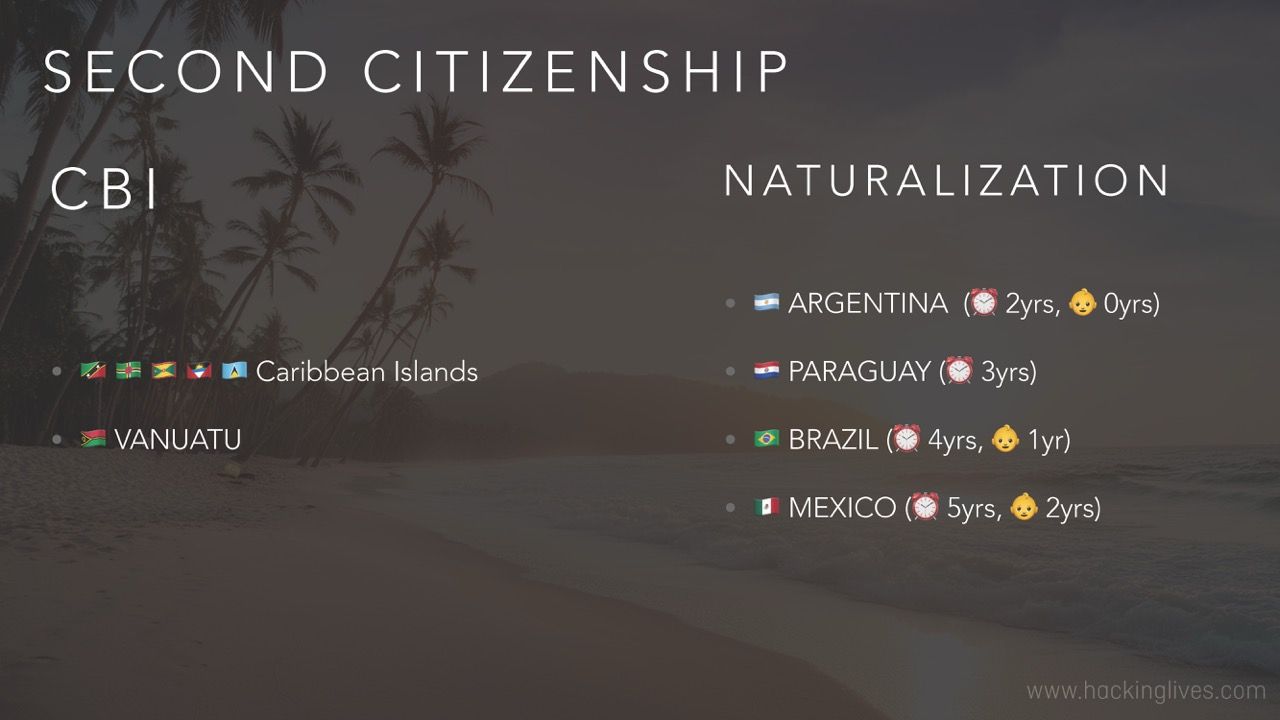
Popular countries that offer a citizenship-by-investment program vs. countries where it is easy to obtain citizenship in the shortest period of time.
There are many aspects to consider when applying for citizenship by naturalisation, such as your relationship with the country, involvement in the economy, and any history, language and culture tests.
Some countries may require renunciation of other citizenships and other nuances that are good to know before going down this route.
It is important to choose a country that will bring benefits to your life and not cause you unnecessary problems. The advantage of citizenship obtained through naturalization is that these are very interesting countries that cannot be obtained through the CBI. However, it depends on what protection you are looking for, as in some cases other routes may be more advantageous. CBI is a quick, workable option where you don't pay with your time.
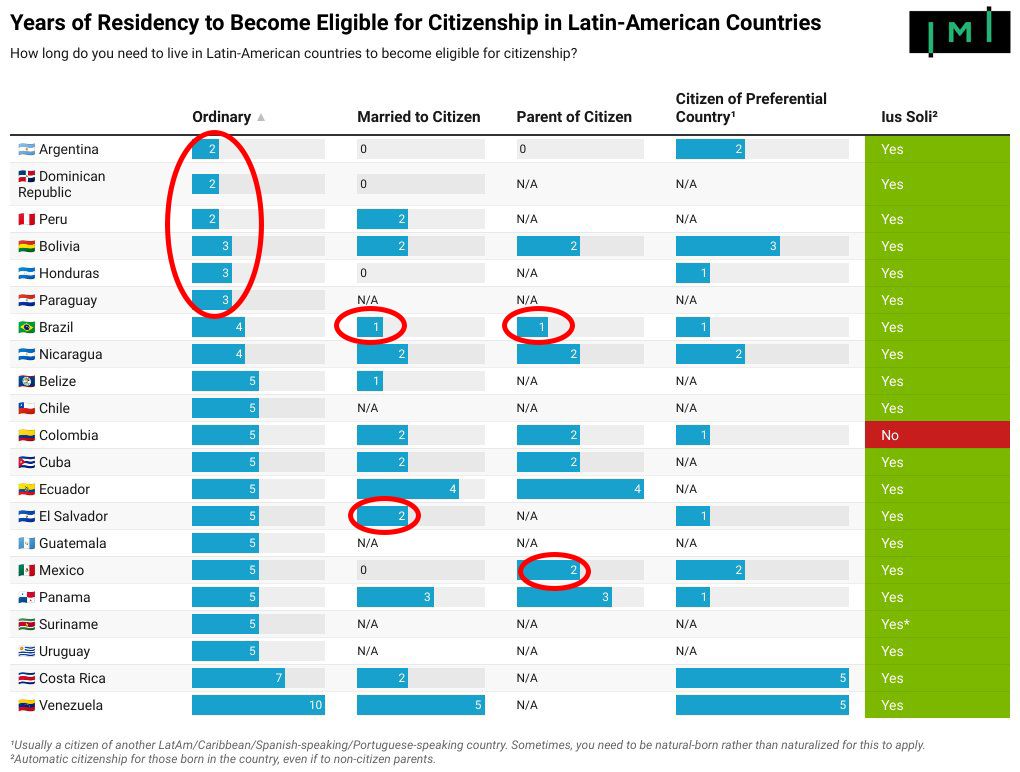
Circled countries may be interesting in terms of time to gain citizenship by naturalization. Either by the standard way or through fast-track options - marriage or birth of a child.
Again, it is not appropriate to generalise here, because with citizenship and 'Plan B' it is important to take an individual approach and avoid a 'one size fits all' approach.
The fifth option is citizenship by birth
This variant is very specific. There are several countries in the world where citizenship can be obtained based on the place of birth of the child. This excludes all countries that apply the principle of "jus sanguinis" (the right to citizenship based on the citizenship of the parents).
One example is Brazil or Mexico. Brazil has a "jus soli" (right to citizenship acquired by birth in the territory of the country). If your child is born in Brazil, he or she automatically acquires Brazilian citizenship. You as parents can apply for Brazilian citizenship after one year of living in the country. This option is a faster way to obtain a second passport. However, without the child being born in Brazil, you would have to live in the country for at least 4 years before you could apply for citizenship. The same is true for Mexico, but in this case it means 2 years of living in the country for the parents with the condition of the child's birth.
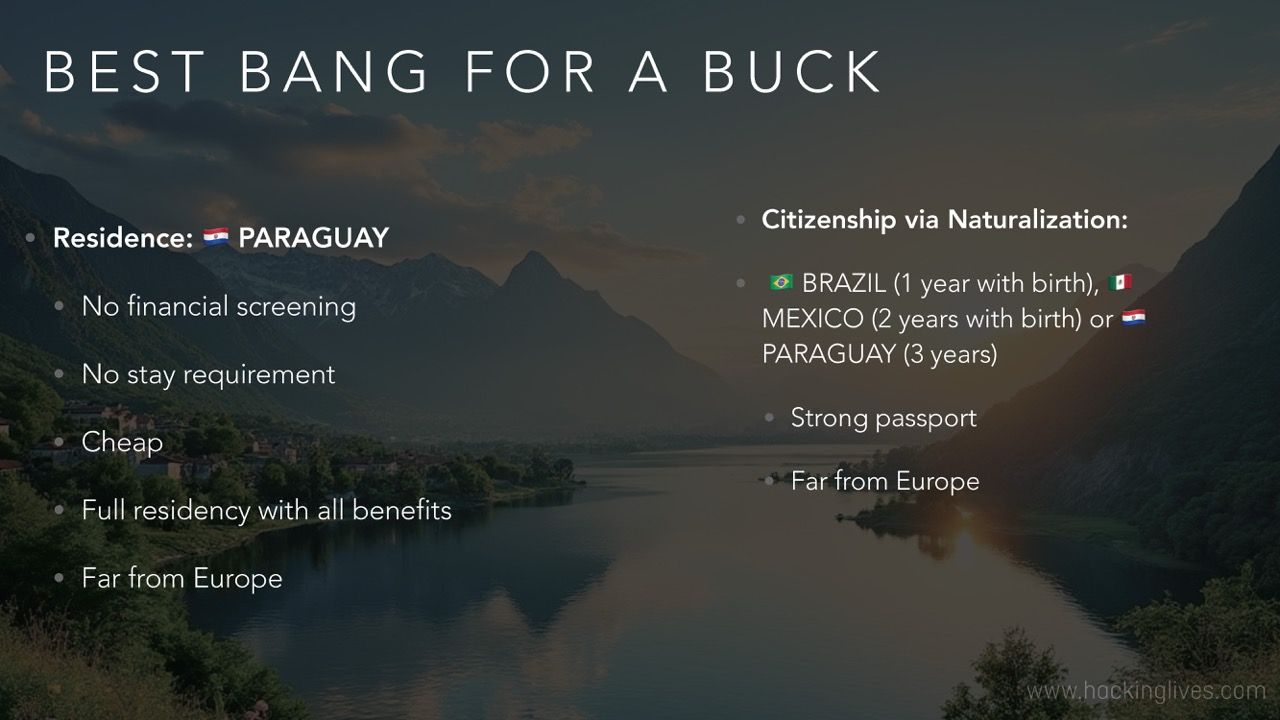
Options with the lowest time investment for residency and citizenship.
Summary: As you can see, there are many ways to get a second citizenship. It all depends on the individual situation, there is no one universal way. Anyone considering getting a second citizenship should consider their life situation and choose the option that works best for them. It is also important to consult with professionals who understand the processes and know the limits and realities of how it works. For example, some countries allow you to apply for citizenship but will never actually grant it. If this topic interests you, we can go into more detail at some point in the future.
Bank accounts
Regardless of whether it's a business or personal account, it's always a good idea to have a backup plan. The situation is more complex, and banks are more invasive of privacy today than in the past. You certainly don't want to rely on one bank, and it's certainly not wise to have all of your bank accounts in one jurisdiction. That would be a mistake.
Personal bank accounts
Look for offshore banking services that will offer you better terms and are interested in you as a client. There are a lot of options and you certainly can't touch everything. There are still plenty of jurisdictions that provide relatively good banking services, but unfortunately the trend is narrowing the field of interesting destinations year after year. Let's take a look at a few popular countries.

Countries that have not signed the CRS (Common Reporting Standard), in other words, protect the banking privacy of their residents.
American Bank
For non-US residents and non-citizens, it may be advantageous to open a bank account in the US. U.S. banks have the advantage of never having signed the CRS (Common Reporting Standard), which means that as a non-U.S. resident, you have stronger financial privacy protections with a U.S. bank than in many European countries.
Panama
Panamanian banks operate in USD and several of them are very supportive of the cryptocurrency industry. Banks have no problem with crypto, on the contrary, they welcome clients from this sector. In terms of banking in Latin America, I would venture to say that Panama is the best the region has to offer, although sometimes it is not easy to open these bank accounts. Panama is mainly interested in creditworthy clients with sufficient turnover.
Gibraltar and Switzerland
Another option is to open a bitcoin-friendly bank account in Gibraltar, or use some banks in Switzerland that are open to non-EU residents and also support cryptocurrencies without causing significant problems. Nevertheless, in all these jurisdictions there is a gradually increasing pressure to obtain more information from clients, not least because they are signatories to the CRS. Another factor to consider is that these banks are profiling themselves more on creditworthy clients - either they require a minimum amount in the account or their account-related fees are higher than usual.
In my experience, it makes a lot of sense to diversify and have multiple options. On the other hand, the more options you have, the more complexity it adds, which can mean potential problems. It's up to you to determine how diversified you want to be and what the ideal compromise is for you.
If you can, try to avoid the banking sector as much as possible and set that mindset, as the banking sector is often a complication, especially when it comes to international transfers and transactions. Your life will become easier if you embrace bitcoin and can operate on it. In terms of global living and international transactions, it is a huge relief not to rely on a third party who has full control of your funds and often high fees.
Homes
Where is your home? This is an important and very personal question that everyone must answer for themselves. It is entirely subjective, depending on where you choose to spend most of your time.
This is today's cost of living from a global perspective, just to give you a general idea.
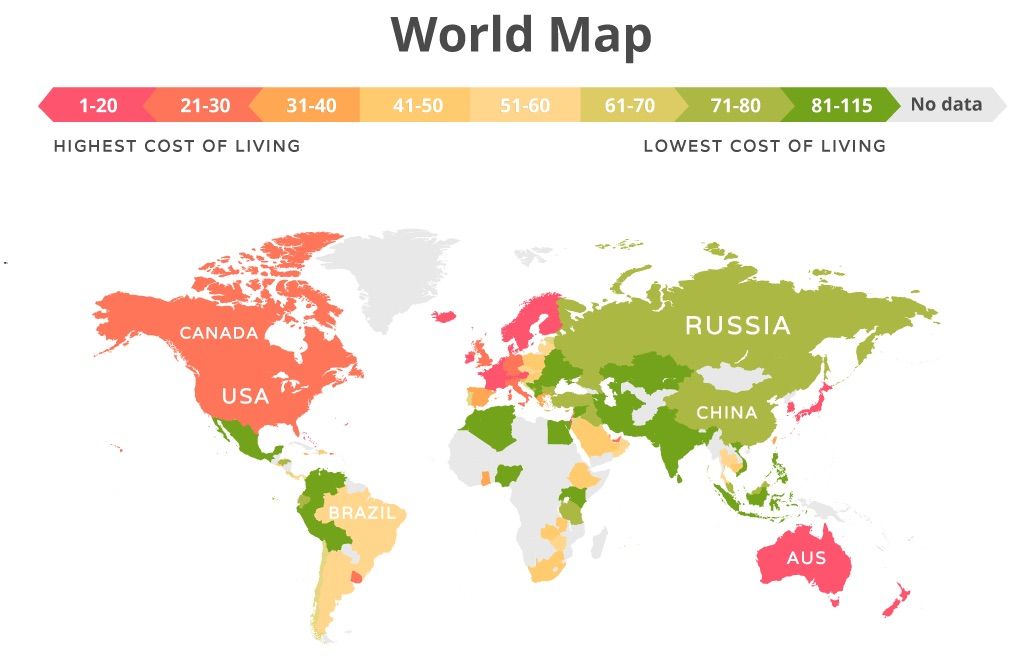
The cost of living in a global perspective.
As a back-up plan, you have residencies in more than one country
You live where you want. It can be any country that suits you and makes sense to you. The criteria that determine where it is good for you to live depends on your preferences. Some prefer to live in the EU, others in the US, some prefer to live in Asia, and for me it's Latin America. This region is close to my heart because of my long experience with Latin American countries and family ties. I also perceive more freedom here - fewer regulations, lower cost of living and more opportunities. This approach is based on living in the country that suits you and having all other residences as a backup in case you need to move to another country. Your easy to reach residences in some countries are just a plan B, you have an open door elsewhere in case something happens.
You have physically moved to a new country
You found your dream paradise and moved there. This means that at the very least, you become a resident of that country, which also makes you a tax resident, because you have moved fully. As time goes on, you will probably become a citizen as well (it's definitely a good idea to strive for this). It's still a good idea to keep your Czech citizenship, but get rid of your Czech residency. In addition, you should have a backup plan in place - look for another country to be your Plan B. While it is great that you have found your ideal destination, it is important to have a plan in place for unexpected situations. The big advantage of this setup is that with time, many people will get a second citizenship (through naturalization), which will give you more freedom.
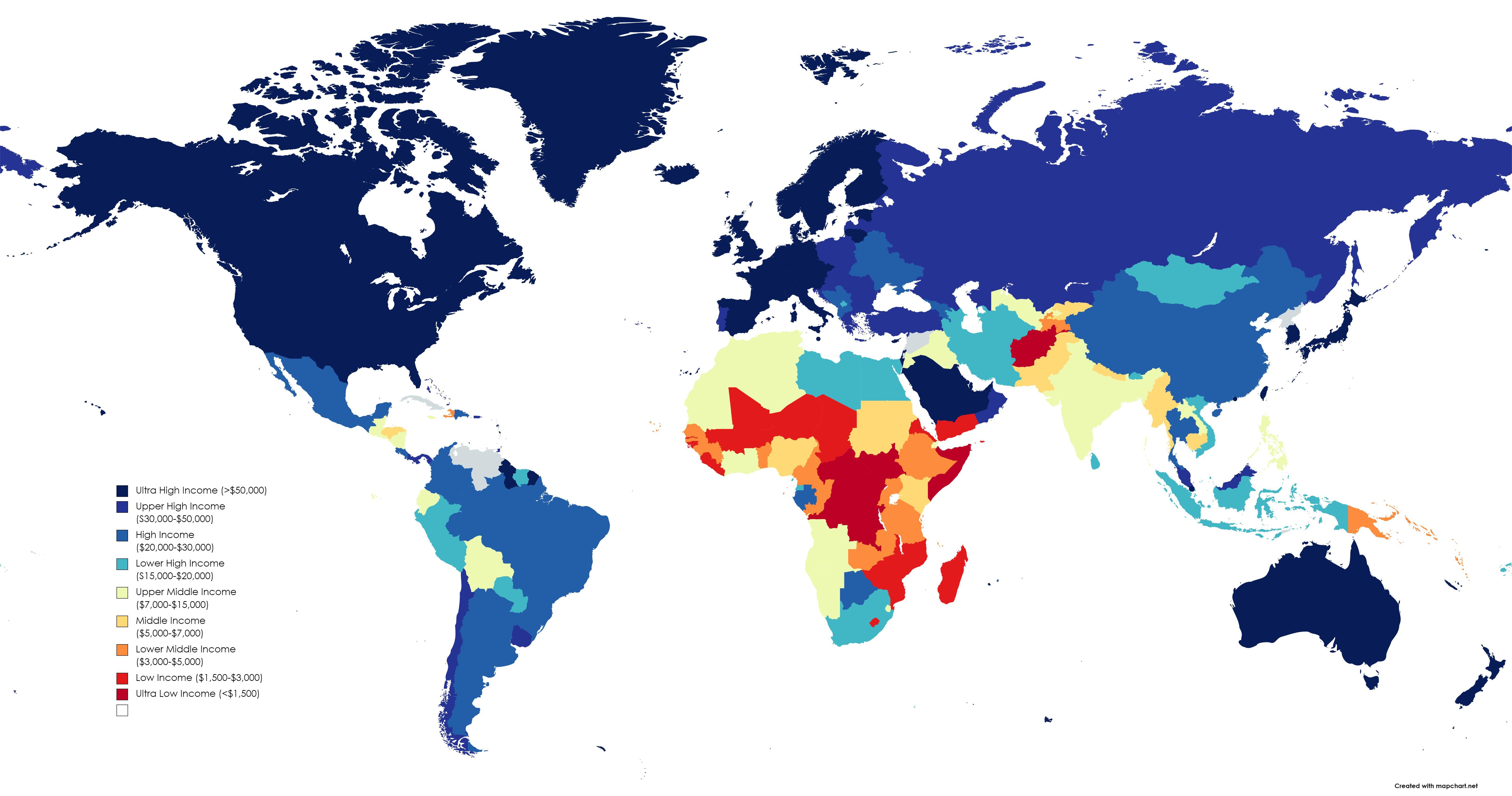
Comparison of minimum wages in different countries. However, this chart does not inform about the cost of living.
And how to search for the ideal country? This involves a lot of individual factors - one of which may be the economic strength of the country in question. This means that with your purchasing power from Europe, you are able to live a much cheaper life in certain countries around the world. That's why Southeast Asia or certain Latin American countries are so popular.
You are a traveller
You live a bit like a "nomad" - you spend less than 183 days a year in one country. Most countries have a rule that you become a tax resident if you spend more than 183 days a year in that country. Example: if you are a resident of Paraguay and a tax resident, but you do not live in any other country for more than 183 days and you do not have a permanent home in another country (or other circumstances that would tie you as a tax resident), then you become a tax resident of the country where you actually live. In this case, it would be nowhere. However, as it is not ideal to be without tax residency for various reasons, such as banks and other institutions you come into contact with, you can choose your tax residency according to your preference. In this case, it could be Paraguay, which offers enough flexibility for this way of life and can hardly be rivalled by any other country in the context of simplicity and cost.
Real Estate
Regardless of where you live or plan to live, it's important to think about how to organize your physical life. There are many different approaches, and I don't want to create a distinction between two camps - one that argues that owning property is a great advantage, and the other that, on the other hand, sees property ownership as a burden. To be clear, both options have advantages in different situations. However, in this article, focusing on the ₿ Plan, I will focus on this issue in a simplified way, only from the perspective of this approach.
Property ownership
Pros: We talk about the country, what is your Plan ₿. Having a property can be a wise decision. However, it is important to compare the value of the property with the market rent, as in some cases it may be more profitable to rent than to buy. If you spend most of your time travelling, you can rent out your property to earn income. Of course, then you don't have a "safe house" if your property is rented.
If you have sufficient funds and don't know where to invest them, buying a property in your Plan B country may be a sensible option. Plus, it can strengthen your connection to the country and sometimes it can even help you apply for citizenship.
If money is not a concern, having "safe houses" around the world is a great solution. It's not an investment that generates a profit, but rather a safe haven that gives you peace of mind. Yes, I'm not a big fan of real estate, specially with the lifestyle I have, but a safe house makes sense. What's the likelihood of needing it? Low. But if you're a prepper, it might make sense. If things are going in the wrong direction and you have a place to go back to, "rearm", make plans for what's next, having a safe house is priceless.
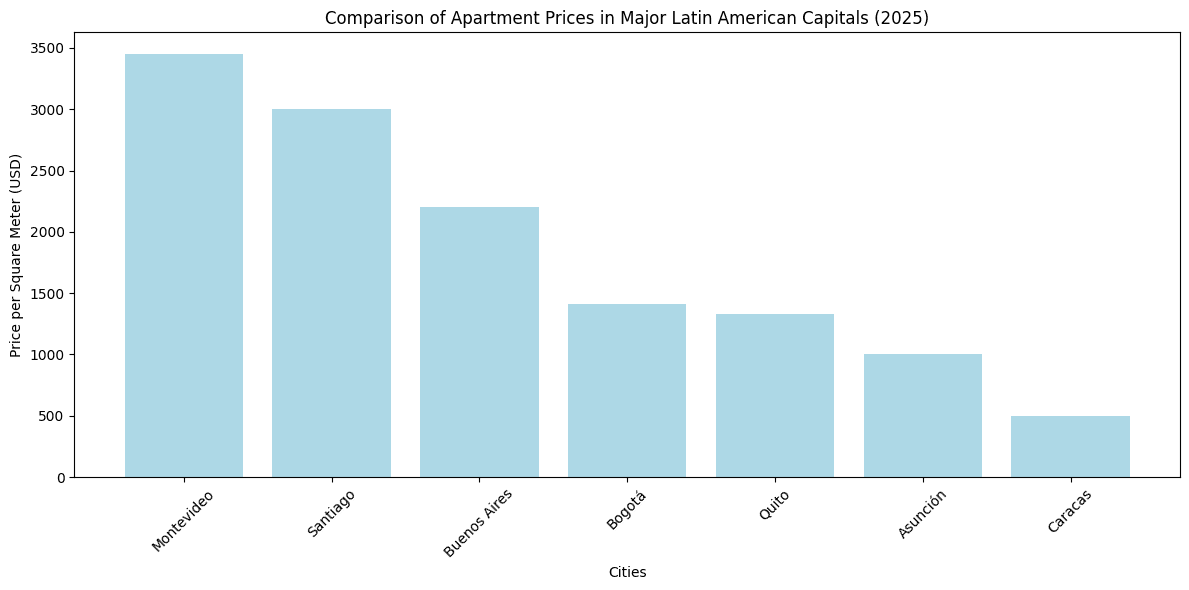
To give you an idea, the price per square meter in selected cities in Latin America (note: these are general prices, where in less popular areas of a given city the price per square meter is significantly lower).
Cons: Property is always a liability because you have to maintain it or arrange for someone to look after it if you don't live there. If you are renting it out, especially for short-term rentals, you will need someone to organise, clean and look after it. Another disadvantage is the need to know the local property market and know your way around prices (actual value vs market value) so you can buy at the right time. Examples of places with exorbitantly high property prices outside Europe are San Juan, Rio de Janeiro or Medellín if you are looking for an apartment or condo in an attractive and prime location. From a "safe house" perspective, this is "dead money", a missed opportunity to invest it elsewhere. However, there is always a quid pro quo. Either you have your safe house and locked up money or you have an investment property, but it doesn't serve as your safe house. This is a decision that everyone must weigh for themselves.
Rental property
Pros : If you live in a country where there is an imbalance between supply and demand in the rental market (e.g. higher supply and lower demand), renting a property can be very profitable. Another factor to consider is how long you have lived in the country. If only part of the year, then renting is much more profitable than buying. In Asuncion, you could pay around $500 a month for a nice apartment in a good location with all the amenities. When you return, you can rent a similar apartment, change your surroundings and gain new experience and knowledge about the real estate market at the same time. Another advantage is that you don't have to worry about property maintenance and it costs you nothing when you're not in the country, which brings peace of mind and no obligations. In addition, your capital is not drowned in the property and you have the door open to capital appreciation in a more efficient way.
Cons: If you live in a country with more supply than demand, the cons are minimal. The only potential downside is that you can't personalize your home with personal items. Another disadvantage for some people may be the feeling that you don't have a fully prepared "₿ Plan" because you don't have a home that you can return to whenever you want, which may be perceived as the absence of a "safe house".
As you can see, there are advantages and disadvantages to each approach, and it is important to consider what is best for you. It will certainly depend on your personal setup. There is no one right solution - it all depends on your lifestyle, finances and the threats you want to protect against.
Assets
More assets mean more responsibilities and worries. Imagine owning several properties in different countries - it's possible, but it comes with a time, financial and mental burden. Even if the properties are rented, you still have to look after them. If you want to avoid this, you will have to hire someone to take care of the management, which of course also costs something. Everyone has a different approach and tolerance to these challenges, but it is important to remember that more property brings more complexity. And the more you own, the better it is not to own it as an individual.
Digital assets
Another option is to move your value into the digital space and store it in bitcoins. With this approach, you can easily move your assets around the world and use the capital wherever you need it. Bitcoin is very liquid and you can use this liquidity instantly, anytime, anywhere, 24/7.
It may not be for everyone to have all their assets in bitcoin, but at the very least it's a great way to diversify your portfolio between bitcoin and stocks (yes, it has its drawbacks, but we'll discuss that another time). Compared to real estate, managing a "digital" portfolio is much easier, especially if you live in multiple jurisdictions. The advantage of digital assets is that you can literally store them in your "backpack" or even just in your head so you can control your entire estate. And we can look at how to properly secure bitcoin to make it truly yours and no one else's next time - how people living in multiple jurisdictions or permanent travelers handle this. I'll start by saying this. You want to be in control of all your private keys. That's the only way you can be sovereign.
Don't be rushed
I don't want to jump to conclusions about what is right and wrong. These choices are very personal and can vary depending on your life setting, stage of life and attitude. What I want to tell you is to think about what you can do to minimize stress, problems and sleepless nights. At the end of the day, it's about your life and your choices. Everyone has different goals - some people desire freedom/autonomy, others focus on securing wealth. It's all good. What matters most is being clear about what you want and being honest with yourself. Once you know what you want, go ahead and pursue it. If it doesn't satisfy you and you don't feel good about it, then it's not the path for you.
Asset protection
Since we are dealing with the ₿ Plan in this article, below is a table that compares different assets in terms of how resilient they are in the event of a "screw-up".
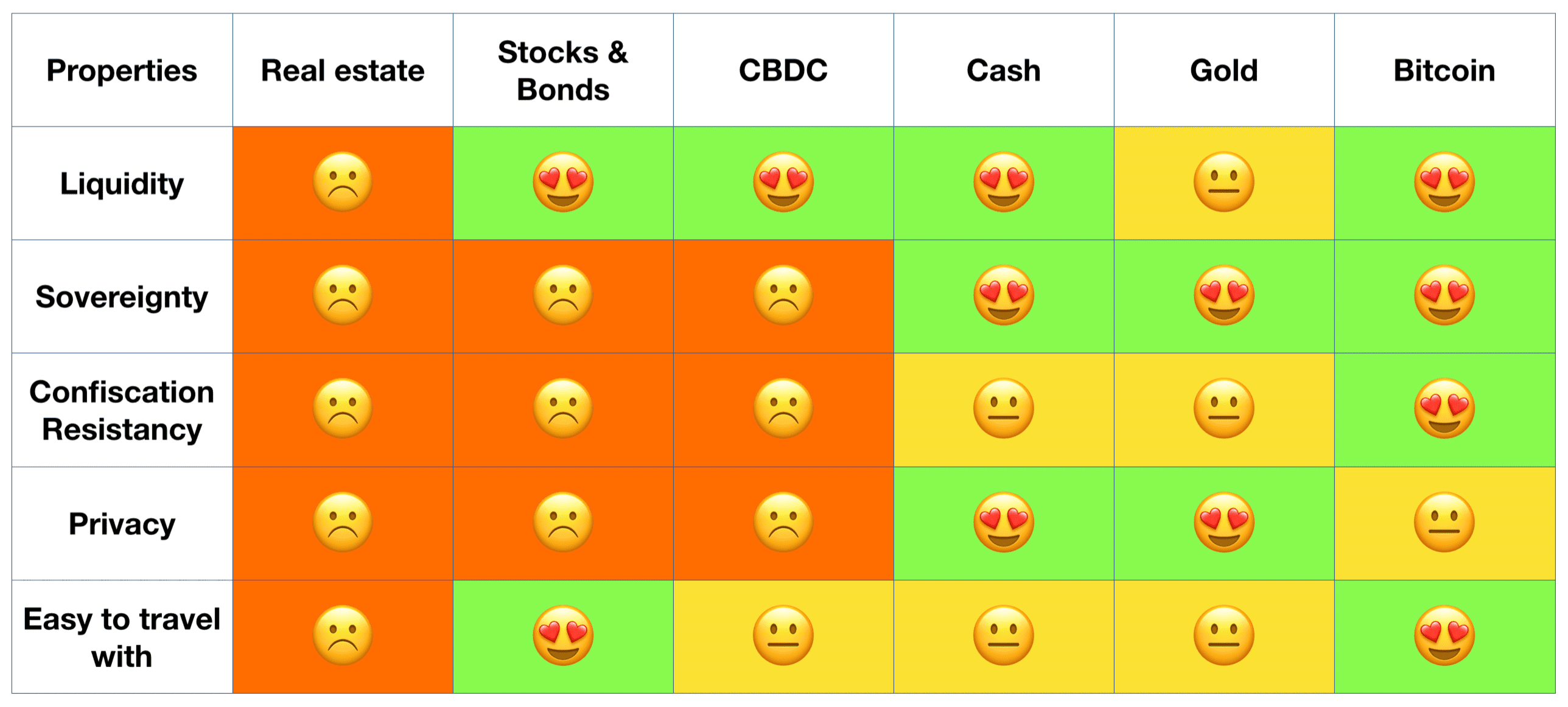
Assets and how much they can protect you if things change significantly for the worse. This could be war, regime change, movement restrictions, etc.
Note that this is not a table of the best investment assets, but what can protect you if "something goes wrong". Also, this is my opinion on the subject and not everyone will agree with me.
Healthcare
If you have successfully moved your residence and are not obliged to pay health insurance in your home EU country, you can choose health insurance on the open market. There are many providers around the world offering different options. The advantage of marketplace insurance is that you pay for the actual insurance related to your health, not a tax based on your income. This system is fair because it encourages individuals to take care of their health, which directly affects how much they pay for insurance. This method encourages you to lead a healthier lifestyle, including better nutrition and regular exercise.
Another benefit is that when you need medical attention, you just go, and because you pay cash, you often get care faster. Most public health care systems tend to be inefficient because of poor organization. With private insurance, you can get quality treatment in private facilities even in countries where public health care is poor.
My tip: If you are healthy, it is a good idea to have basic health insurance in case of hospitalization, surgery, etc. Your monthly payments will be low, but some treatments may be extra. Still, you will save money overall, especially if you exercise regularly, pay attention to your diet and keep yourself in good shape. As you get older, it may be helpful to pay extra for preventive checkups or even services that don't require hospitalization or extra care.
This topic is very broad and I do not want to go into details and complicated scenarios now. I just want to point out that market mechanisms can be used to make the health system work efficiently for the majority of the population. Properly set incentives help the whole system to function.
If you want to explore the health insurance market, you can look at
William Russell, Foyer Global, IMG Global, Allianz, Cigna, Vumi, Safety Wing
Global data providers
If you want a really good Plan B, it's important not to rely on just one provider in one country. This can be a big limitation, plus that provider will have all the information about you and can do whatever they want with you. It is also worth having a provider that offers services anonymously, without the need to know your basic details. This should be an essential element of your plan B - minimise your digital footprint, be able to disappear if you need to.
There are plenty of options on the market, with Latin American countries often offering very good prices for large amounts of data. With this, European operators have a hard time competing with them in any reasonable way.
The basic idea is not to rely on just one solution, have multiple phones, multiple tariffs and some of them anonymous. And remember that you shouldn't carry phones together.
There are multiple options in the market. If you are a Paraguayan resident, the best choice is to have Personal International MegaPlan with roaming available in whole North and South America plus Europe. 80GB per months does the work.
Another option is to get anon esim card from Silent.link and top-up as you go with bitcoin. You have to check the data prices in each country because they vary quite a bit. This is not a one-size-fits-all solution for global data. But it certainly has a place in your overall setup.
Another option that works well is to get esim card from Keepgo and ideally pay with bitcoin. They offer plans for different regions - EU, US, Asia, Latam, etc. You will find the package that fits your needs. Excellent service.
Last but not least is Google Fi. I have no experience with this one, but I've heard it could be a great solution for some. I cannot say how good it is, but I heard it works. Do your due diligence on this one.
I hope I will be able to write more about this topic and how to make your communication more private.
Company/companies
It is crucial to ask yourself a couple of questions first. There will not be a simple answer for many of you, because it depends on multiple factors:
- Where is your customer?
- Where is the place of conducting your business?
Let's look into that a bit closer, shall we?
The place of conduct of the business is in the EU:
If your company carries out its business in the EU, it does not make much sense to set up a company outside the EU. This is due to the fact that you must pay taxes in the nation where your business is conducted (if not running online business which changes everything). If you have a company and want to reinvest all your profits, then it makes sense to set up an Estonian company. The Estonian company has a 20% profit tax, but it only applies to the profits you want to withdraw. That means that the money you keep in the company you can use to reduce your taxable base. Another option is to set up a company in Cyprus, where taxes are 12-13%. This is a very good option.
The business are services or digital services and the place of conduct is not in the EU
Customers are from EU:
In this case it makes sense to incorporate a company in the country where territorial taxation can be applied. In addition, the country has a signed double tax treaty. One of the options is the disregarded US LLC corporation (e.g. in Delaware or Wyoming). You, as a non-US citizen, can benefit from this. Incorporation is simple, quick and straightforward.
Caveat: When the value of your services exceeds a specific threshold (which depends on the country where your clients are located), you must register with the tax agency of the country where your clients are located. If your company is small, this is probably not a concern. However, it is important to study the local laws and know the requirements. Ask your CPA or law office to brief you on local laws that you should comply with.
From 1.1.2024 all newly created LLC companies will be requested to report beneficiaries with FINCEN
Customers are from EU and from USA:
The same applies even if you have US customers. There are many misconceptions about this. You can still effectively run U.S. LLC disregarded company and not pay U.S. taxes. You just have to comply with the rules that you do not have ETBUS (engaged in trade or business within the United States) and ECI (effectively connected income).
To be considered ETBUS: The entrepreneur has at least one "dependent agent" in the U.S. or/and the dependent agent does something substantial to further the entrepreneur's business in the U.S., as opposed to just something administrative or ministerial.
An example of when you don't fall under ECI: there is no relationship between your company and any U.S. suppliers. You are soliciting, receiving and fulfilling orders from another country. You have no offices or personnel in the United States. You do not work with any suppliers or use any vendors. This scenario, for example, can work when you sell digital products.
If you fall under ECI, such as using third-party vendors (Amazon and others), you can still get tax relief from the U.S. IRS, but you have to fill out specific reporting forms (1040NR, 8833).
Caveat: In this case of falling under ECI, you already have to report your US business activities to the IRS, even though your business won't be liable for income taxes in the US.
Note: Please note that this is only a general overview. Laws change often and it is not certain that this will work in the future. It is also strongly recommended to check your specific case, as there are many caveats. Always check your options with the IRS or a CPA. If you want to be sure you won't fall under ECI and not fulfilling ETBUS the best option is to not have US customers and having no warehouses and personnel in USA.
US citizens
Requires different approach. One of the best options on a personal level is to relocate to Puerto Rico and become "bona fide" resident which gives you tax benefits under the 22nd and 60th Act.
Payment options
If you want to have a functional ₿ Plan, this topic is essential. There is no point in having ten residential cards sorted out in your wallet if you haven't thought through how to actually pay in a crisis situation.
If you have a crate of gold at home, but at the same time don't have "emergency" cash in dollars, something is wrong. Preparing for the ₿ Plan should include solutions for realistic scenarios, not just apocalyptic ones. In such cases, USD or bitcoin are much more practical.
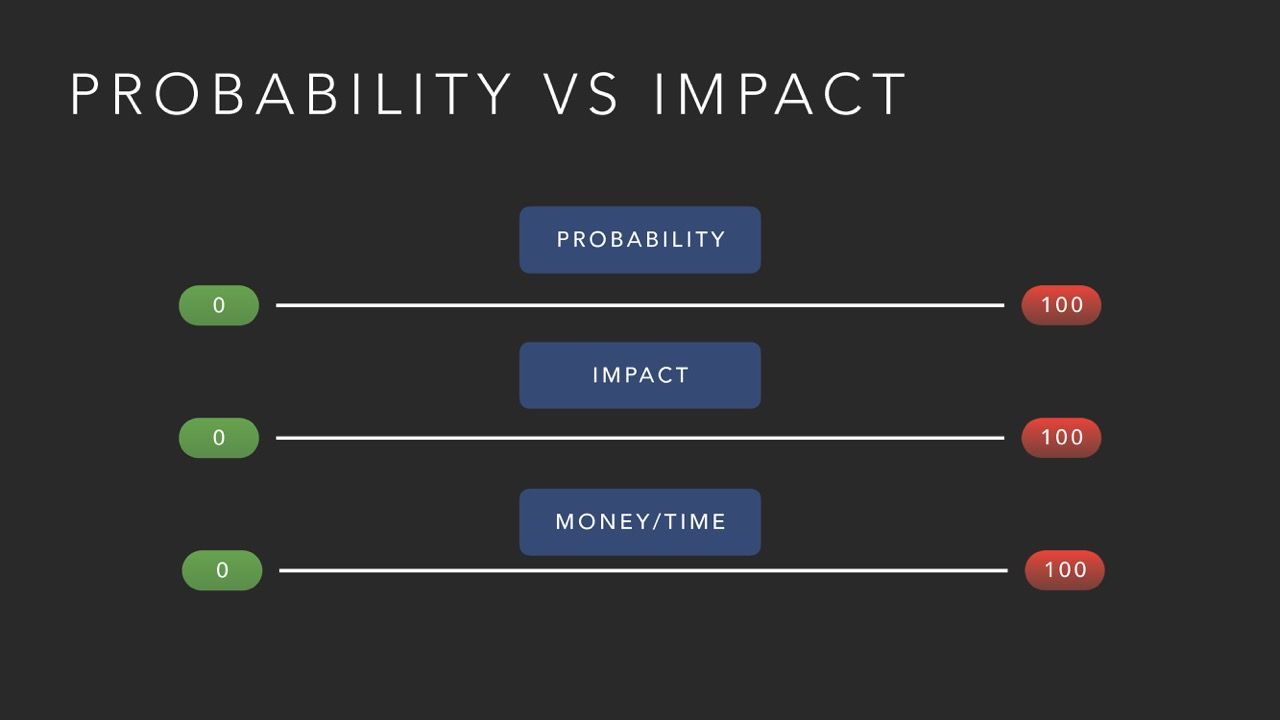
Assessing the situation in terms of likelihood and impact on life and how much time or money the situation requires to resolve it.
Of course, you can consider scenarios where gold could play a role, but if you consider the situation in terms of probability and impact, gold is probably not the number one priority.
Personally, I look at problems and solutions in terms of probability and impact on my life. This approach always helps me to determine the right level of importance and prioritization of a given issue.
Cash
There are multiple ways to provide payment options, but it is still the case that cash is king in most parts of the world. In many situations, especially crisis situations, cash is the way to go. It is best to carry U.S. dollars that you can exchange for local currency whenever you need it. The US dollar is globally recognized and convertible almost everywhere.
While it's not always the most convenient - for example, going to currency exchange offices or finding a convenient place to exchange dollars - the dollar itself will help you even if you don't have local currency on hand. If I can give you one piece of advice, which is also part of the opsec, it is to always carry $100 for any country and $200 for "first world countries". This cash is crisis cash and no matter what country you are in, $100 can get you out of an incredible problem and solve a lot of things. This experience has been proven on every continent and remains one of the most reliable strategies to remain flexible and confident in dealing with unpredictable situations.
Bitcoin cards
Another great option is to use bitcoin and stablecoins. While you can't always pay directly with bitcoins, exchanging them for local currencies or US dollars is usually quite easy. In some countries, especially in Latin America, stablecoins can even be more practical. However, a great solution is not to rely solely on bitcoin or stablecoins, but to get crypto credit cards as well, at least as a backup. These cards, allow you to easily and conveniently spend your crypto, even in situations where it might otherwise be complicated. The spread is manageable, and they bring an efficient way to use bitcoin or stablecoins for routine payments around the world.
Bank Cards
Everyone is familiar with credit cards and most people have at least one debit card. However, it's a good idea to have more than one because not all cards work everywhere, which can cause complications. I recommend the following basic setup:
- Don't rely on one bank in one country - Diversification is key for unexpected situations.
- Use credit cards for travel - If someone steals your money, the risk is less than if it were a debit card, the money is not yours. Plus, you can build a credit history, which is useful if you plan to spend the money anyway and don't mind the bank keeping track of it.
- Have cards dedicated to multicurrency accounts - These accounts make traveling much easier. Revolut, for example, offers many benefits, especially on higher-paid plans.
- Use Apple Pay if you have an iPhone - Paying with Apple Pay provides more privacy than regular cards or Google Pay.
- Use foreign cards - These give you more privacy. If a merchant offers to exchange currency, decline and leave the exchange to your bank - it's usually more convenient. Rule of thumb.
- Use foreign cards for ATM withdrawals - A good strategy for a little better privacy, yes the ATM has a record of your withdrawal, but the subsequent cash gives you a greater degree of privacy. If you get into a situation where you have spent all your cash and have to deal with a crisis, this is extremely workable especially in third world countries.
Having a well thought out card system can save you not only worry, but also money and time.
In conclusion, the key is to be able to effectively combine all available options and not rely on just one. You never know when and where you will need a solution. That's why having cash, bitcoin and cards ready is essential.
OPSEC
When choosing a country for your ₿ Plan, you will need to answer a few key questions. One of them is: Is this country safe for me and my family? This is a key consideration because personal safety plays a vital role. But how do you choose the right country where you will feel safe, just like at home? This question is very individual and it is therefore difficult to give universal advice. Nevertheless, it is possible to generalise at least partially and to point out places that may be risky. Especially if you have not encountered the term "opsec" before and are unsure of how to proceed in a new location to ensure your personal safety, it is important to familiarize yourself with basic protocols and procedures.

The endless cycle of Opsec - how you can evaluate the situation and correctly execute the steps to eliminate the problem.
When you live in several Latin American countries, you find that to many outsiders they sound like they are one entity, much like the United States. But in reality, there are huge differences between the countries. The same is true within Latin America - same language (except for Brazil), but significant differences. When you delve deeper, you find that the differences are not just between countries, but between cities within a country, and even between neighborhoods within a city.
Reality
From my own experience, gained during two decades of living in different countries, I can say that among the safest places in Latin America today are Paraguay, Uruguay, El Salvador and Puerto Rico. Yes, I am simplifying, I realize, but in the context of this article, such an approach is necessary. And no, I am not comparing these countries to places like South Korea or Japan, where the level of security is quite different. I would like to discuss what security means in relation to a certain degree of freedom and autonomy in another article.
The countries mentioned - Paraguay, Uruguay, El Salvador and Puerto Rico - offer a combination of freedom and security (to clarify: Cuba may be safe, but freedom is not to be expected here).
If I take into account all the aspects we have discussed in this article - such as resident or citizen obligations, time on site, costs and expenses - and add the issue of security and freedom, the result often points to Latin America as the ideal choice for Plan ₿. I addressed this topic a bit in my earlier OPSEC basics for your life
Digital OPSEC
Have you ever thought about how you have backups of the key things you need in every situation? If you're working on your Plan B, I mentioned earlier that it's not necessary to have every potential problem under control. It's important to assess it in terms of its likelihood, its impact on your life, and possibly consider how much time and money it costs to resolve.
Imagine a situation where you have "a million" permissions to be around the world, but you leave at speed and leave the access device to your password manager or two-factor at home. This could include backups to your password manager, backup codes to restore accounts, or access to TOTP two-factor authentication. Without this data, you won't be able to access most services. And no, one password for all services doesn't cut it these days. Or rather, it was never a solution. The same goes for proper seed backups of your bitcoin wallet or plans for inheritance and disposition of your assets after death.
You can see how simple vs. complex brute-forcing passwords is today here.

How difficult it is to crack a password depending on its length and the number of different characters.
It is essential to have these issues resolved. There is no point in having some parts of Plan B 100% complete while others remain at zero.
The topic of either physical or digital Opsec is extremely fascinating, comprehensive and full of detail. So sit back sometime and think calmly about whether you actually have all the key backups sorted - for example, how you will access your bank account should you lose your access device. And trust that Face ID is not a one-size-fits-all solution. If you lose your device, you lose your stored biometrics, which can easily be a fatal mistake.
Conclusion: why do it at all?
Why endure and undergo all these processes?
- It provides options. You have a ₿ Plan when you need it.
- It offers you the opportunity to optimize your life, gain more autonomy and sovereignty, and make the most of it (especially if you have a family).
- It offers you the opportunity to start a new life in a new country with a better overall arrangement.
That's it! I know it was quite a long read, but the basics are thoroughly explained in the article. I wanted to collect all the key approaches, so now you can take your notebook and go through each paragraph yourself. Once you have more specific questions, you can start taking action. Remember, there is no one-size-fits-all solution. You will probably need to tailor the approach to your needs, risks, priorities and preferences.

Note: The article is written from the perspective of a non-US citizen. For US citizens it is increasingly complicated in terms of taxation and corporate taxes. It is possible to optimize the whole setup, but because of the citizenship based taxes (which are effectively US and Eritrea) there should be a different setup in place. One of the simplest options for US citizens is to move to sunny Puerto Rico, where you live more than 183 days a year (become a bona fide resident) which gives you tax benefits under the 22nd and 60th Act. More on this in another article.
Having helped many clients from around the world, we aim to provide a detailed overview of Plan B options globally. If you need personalized assistance, explore our services today and discover how we can help set it up for you.