Simple Global Set-Up in 5 Steps in 2024
Lately, I've been receiving many questions about how to create a simple, global, and personal structure that is less prone to potential threats or downsides.
I understand this can be quite specific, and I can't detail exactly what will work for each of you. However, I'll outline the basic principles and provide examples that can serve as a foundation for your own planning.
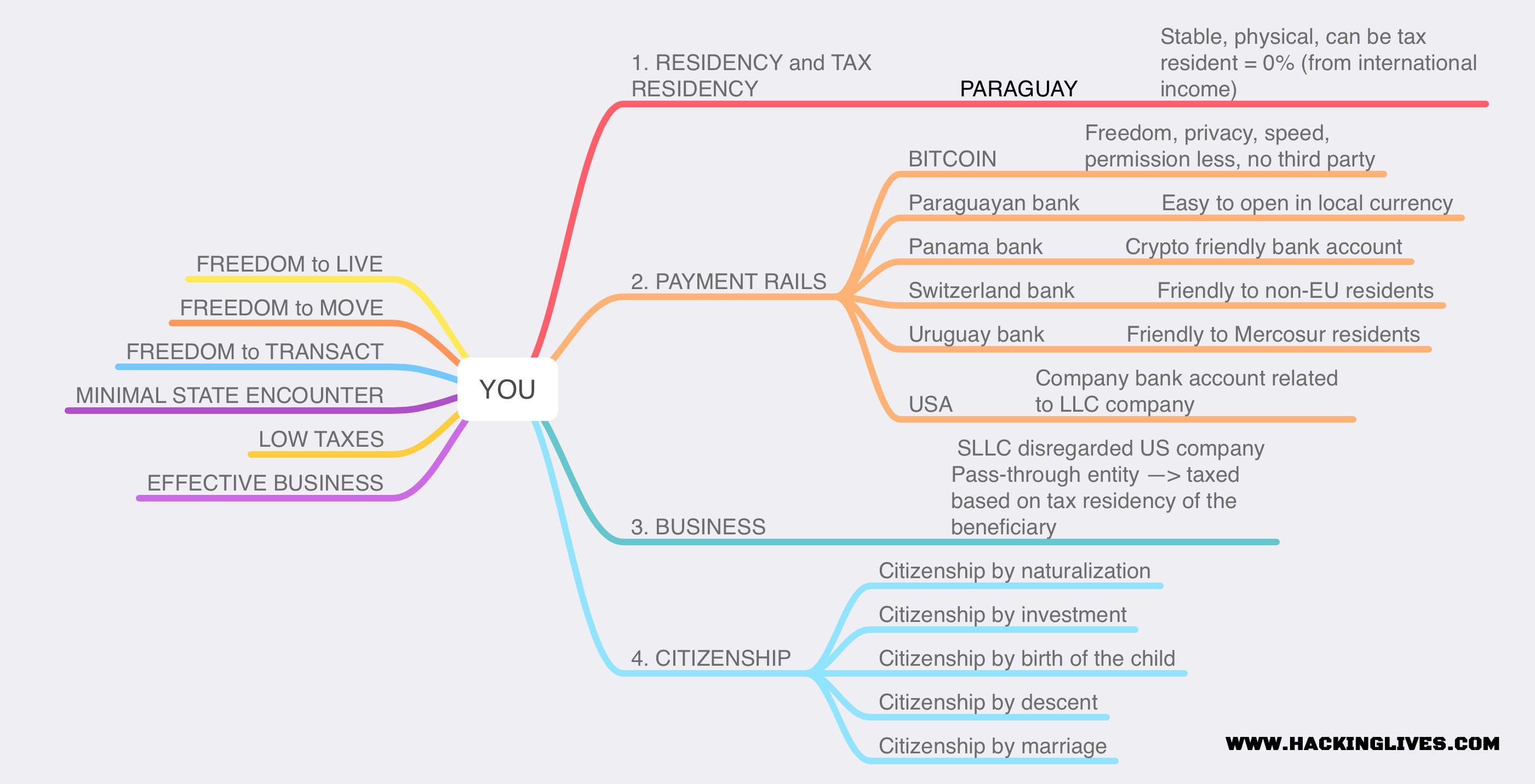
1. Residencies
First, consider how diversified you are in terms of residences and citizenships. It's not about accumulating as many as possible, but rather selecting the right ones that provide more options and freedom of movement.
Citizenships are more complicated because they're harder to obtain—either more expensive in the case of Citizenship by Investment (CBI) programs or requiring time and effort for naturalization. Having a plan to eventually obtain another citizenship rather than relying on just one should be part of your long-term strategy. We'll revisit this topic at the end of this article.
Your first step should be establishing residency in a country where obligations are minimal or nonexistent. These are much easier to obtain and maintain. Additionally, residency is a prerequisite for citizenship by naturalization.
Here are some examples of residencies that meet many requirements and offer good value (considering costs, prerequisites, maintenance requirements, and tax benefits):
- Paraguay - Easy to obtain and maintain residency. Probably still the best option worldwide when considering all factors.
- Panama - Fairly easy to obtain and maintain, though more difficult and expensive compared to Paraguay. There are more requirements to become a resident (except for Italian citizens who can obtain residency more easily through the Visa treaty).
- UAE - "Freelance visa" in a free zone is quite affordable, but requires regular visits to the territory and annual visa extensions.
There are many other options, but those mentioned above are straightforward in many ways. With other residencies, you'll face more compromises—either stricter requirements to maintain status (such as spending a certain period in the territory each year), tougher qualification criteria, or less favorable tax conditions.
2. Tax Residency
Your lifestyle largely determines your optimal tax residency. If you're a digital nomad "living permanently out of a backpack," selecting a tax residence with 0% taxation is wise. Paraguay and Panama are good examples.
If you have a more settled lifestyle, it may be beneficial to live in these countries for half the year to establish tax residency and benefit from 0% international income tax.
If you're considering this approach, I recommend researching Paraguay as your first step due to its 0% international income tax and the relatively low cost of obtaining and maintaining residency. You'll understand the benefits more clearly later in this article.
3. Banks
This is perhaps the most complex aspect of a diversified global plan. Unfortunately, banks operate by their own rules and can be quite frustrating to deal with.
Banking should be step #3 after establishing your physical and tax residency. The advantage is that you'll be able to open accounts in countries where your previous residence might have caused problems. You can diversify your banking relationships and disclose your new tax residence (to which banks will report).
Some recommended countries for opening bank accounts include:
- Panama - Crypto-friendly banks
- USA - Never signed the Common Reporting Standard (CRS) despite initiating it
- Paraguay - Useful for local transactions, never signed CRS
- Uruguay - Good banking services; possible to open accounts as a non-resident but Mercosur country resident
- Switzerland - Open banking system even for residents outside the EU
- Gibraltar - Xapo Bank (Bitcoin-friendly)
- Revolut (fintech) - No need to disclose tax residency for Paraguayan tax residents (as Paraguay has 0% tax on international income, according to direct information from Revolut)
4. Bitcoin
Having discussed banks, it's important to mention Bitcoin. Banks have significant drawbacks, and Bitcoin has a crucial place in your overall setup. I'm not talking about Bitcoin as a store of value, but rather as a tool for freedom to transact. Where banks fail, Bitcoin excels.
If you haven't experienced "flagged" or "frozen" wire transfers, you're fortunate. It will likely happen eventually, especially with international transfers. Banks are expensive dinosaurs burdened with inconveniences, regulations, privacy intrusions, and unnecessary complications.
I recommend limiting your use of the banking sector as much as possible for both private and commercial transactions. Bitcoin provides privacy, reliability, and permissionless transfers.

If you're new to Bitcoin, take time to study the basics and embrace this technology. You'll eventually realize that the banking system should be your last resort, used only when Bitcoin or cash transfers aren't viable options.
To be clear, we're discussing completely legal activities. Even when operating entirely within the law, banks remain problematic. They rarely make things easy or simple. Being able to circumvent this "bullying" from banks by using a system where you can transfer money without anyone's permission is simply smart.
5. Business
For entrepreneurs and business owners, this should be step #5. You need a company based in a country that has signed double tax treaties. For tax residents in countries with territorial taxation systems, the USA is an excellent place to establish a company. Note: This doesn't apply to US citizens/residents.
Set up a Single-Member LLC (SLLC) that acts as a disregarded entity for IRS purposes. This means the company functions as a pass-through entity, and all income is taxed based on the beneficiary's tax residency. When your tax residency is in a territorially taxed country, you can effectively receive income without taxes. You're welcome.
There are some caveats to this approach, which you can read more about in the linked resources.
6. Citizenships
Once your residencies are established, you can consider citizenships as a future step. If you can't obtain citizenship by descent or marriage, you have three other popular options: citizenship by investment (CBI), citizenship by naturalization, or citizenship based on the birth of your child.
Citizenship by naturalization requires countries with relatively low physical presence requirements (around 2-3 years to be eligible). You should enjoy living in the country since you'll need to relocate and physically reside there. There are no shortcuts.
Suitable countries include Argentina, Paraguay, Dominican Republic, and Peru.
Citizenship by investment involves paying money (either as a contribution to the country or investing in real estate, usually at double the "contribution" amount). Essentially, you're using money instead of time to expedite the process. Several CBI programs require only an investment and often no visit. While these passports may not be as powerful as those from other countries, they serve their purpose.
Options include Antigua & Barbuda, Dominica, Grenada, St. Kitts & Nevis, Saint Lucia, Malta, and others.
The final option is citizenship by birth of a child. In some countries, it's possible to acquire citizenship shortly after your child is born. This applies only in countries with "jus soli" systems, with Brazil offering the fastest path to citizenship for non-citizen parents.
To Wrap It Up
These are the three main steps to consider when getting started:
- Residency and tax residency
- Using Bitcoin and maintaining several bank accounts distributed across the world
- Establishing a business entity
If you're on a tighter budget, this setup might be an excellent starting point:
- Residency - Paraguay (requires just a one-day visit to start the process). Affordable with minimal requirements to maintain residency over the years.
- Tax residency - Paraguay (register with the Tax office)
- Bitcoin - Learn how Bitcoin works and start using it. Leverage its self-sovereignty. Minimize your exposure to the fiat system. Bitcoin is more reliable, faster, cheaper, and permissionless. You can transfer money globally in seconds (or minutes for larger amounts) without fear of regulatory interference. If you've ever tried making a bank transfer from Europe to Latin America, you probably understand Bitcoin's advantages.
- Banks - Diversify with various banks to avoid putting all eggs in one basket. Depending on your preferences, USA, Switzerland, Uruguay, and Panama are generally good choices in this "necessary evil" category.
- Business - Set up an SLLC in the US and serve all non-US clients through this LLC.
Later, you can explore other aspects such as citizenships (which take longer or are more expensive).
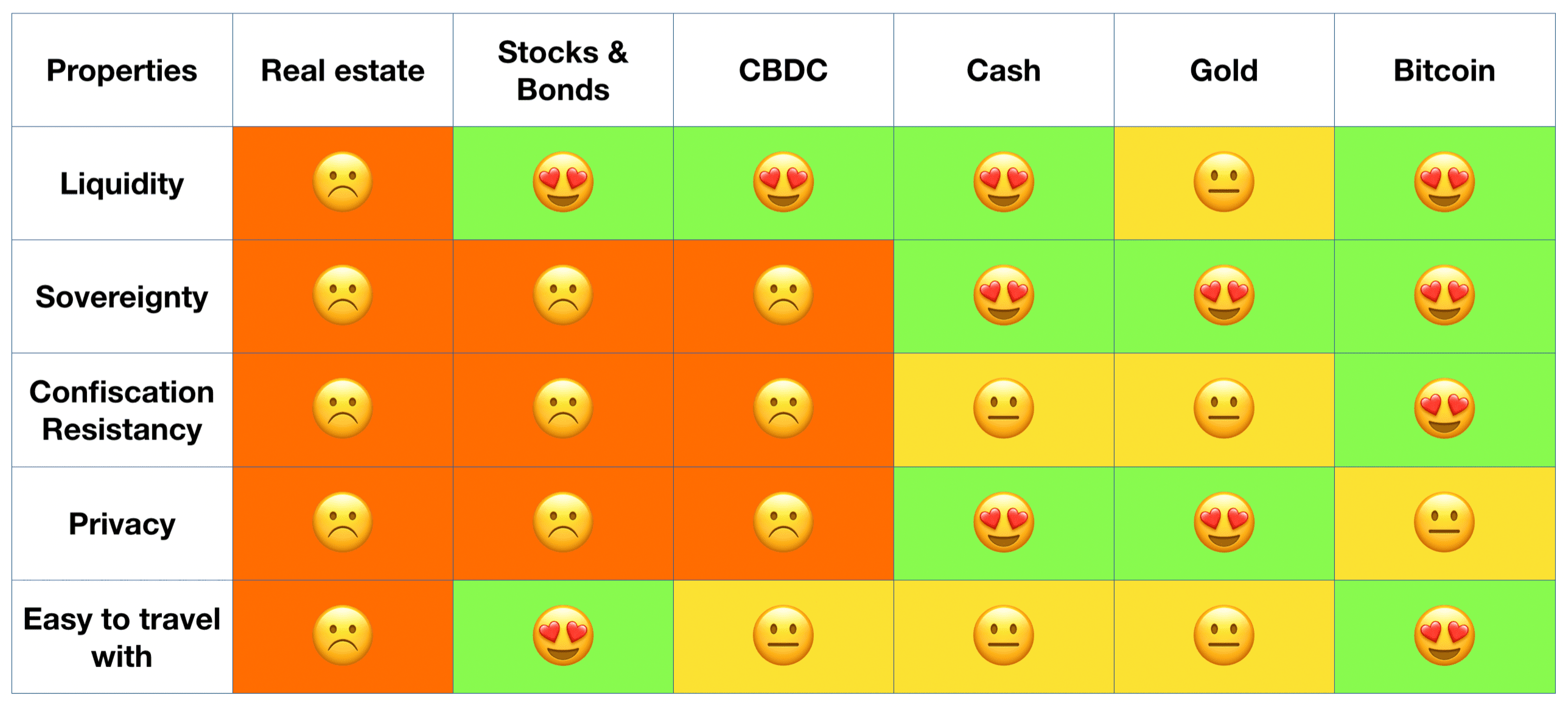
You might also consider investment opportunities, such as the real estate market in Paraguay or other options. Just keep in mind your personal setup, what problems you're trying to solve, and what kind of "insurance or protection" you're seeking.
I hope this helps you better understand this topic. You can implement these steps relatively quickly—within about two months—and enjoy greater freedom and an improved quality of life.