Real Estate Market in Asunción (2024)
Paraguay, or better said, Asunción, is gaining ground in the "Plan B" of many foreigners. This is due to many different reasons, and one of them may be the geopolitical tensions in Europe or worldwide. Paraguay is not a popular tourist country, but rather an isolated place where you can safely (for Latin America) "park" your money as your own diversification. But how and where?
The first logical step would be to obtain residency in Paraguay for many reasons that I will discuss later in this article. One of them is the tax benefit for residents in terms of renting, buying, or selling real estate.
However, if you wish, you can buy a property in Paraguay as a foreigner. It is not necessary to be a resident to be able to buy a property, but it is a great advantage to be a resident.
The question now is: Is it worth investing in real estate in Paraguay? It depends on what you expect, but the general situation is as follows:
- ❓ Potential for appreciation (in the long run)
- ✅ Relatively stable political environment
- ✅ Payment in Bitcoin or cash
- 👎 Low liquidity for selling the real estate
- 👎 Low rental income
Real Estate Overview in Asunción
The city of Asunción, capital of Paraguay, has about 3.5 million inhabitants in 2024 (including all suburbs). The price per square meter varies according to location. It can range from $800 to $2,000. Focusing on “luxury areas” within the city, we are left with 1 m² for around $1,500+ for apartments in Asunción.
According to CENSO 2022, there are 2,109,864 housing units in Paraguay and some 440,000 vacant units, according to preliminary data.
According to Raúl Constantino, president of CAPADEI, 75% of the real estate in Asunción is acquired for investment purposes, with a strong influence from Argentine investors.
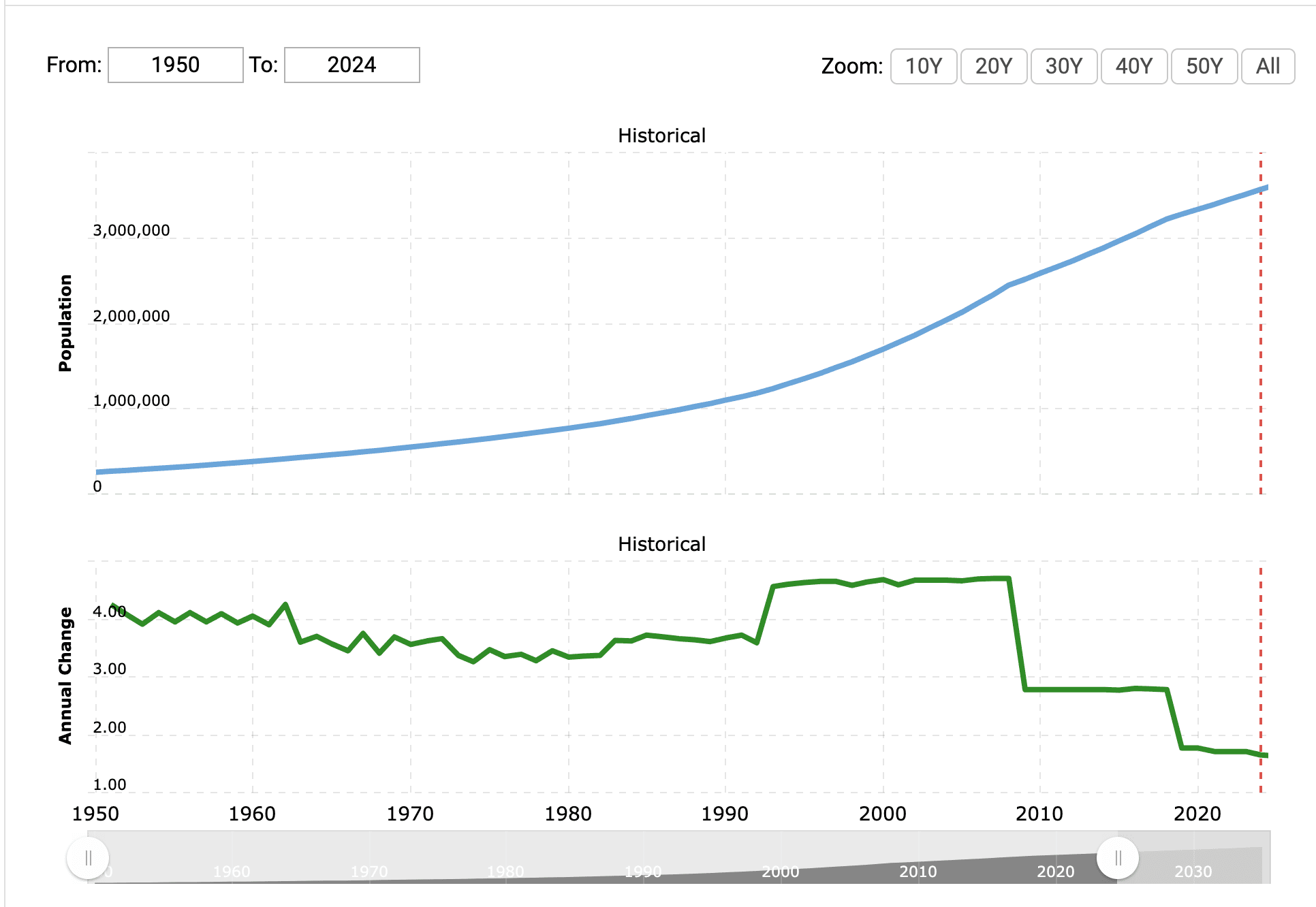
Inhabitants growth from 1950 - 2024
It is not expensive to buy an apartment in Asunción compared to Europe or the US, especially considering that we are talking about the best areas within the city.
It is important to mention that apartments in luxury areas come with a lot of amenities, such as a swimming pool, gym, barbecue area, co-working space, etc. 24-hour security is a standard in this type of building, and you can also buy a parking space inside the building.
However, it is important to be aware of the constant supply because there is plenty of free space where construction can occur.
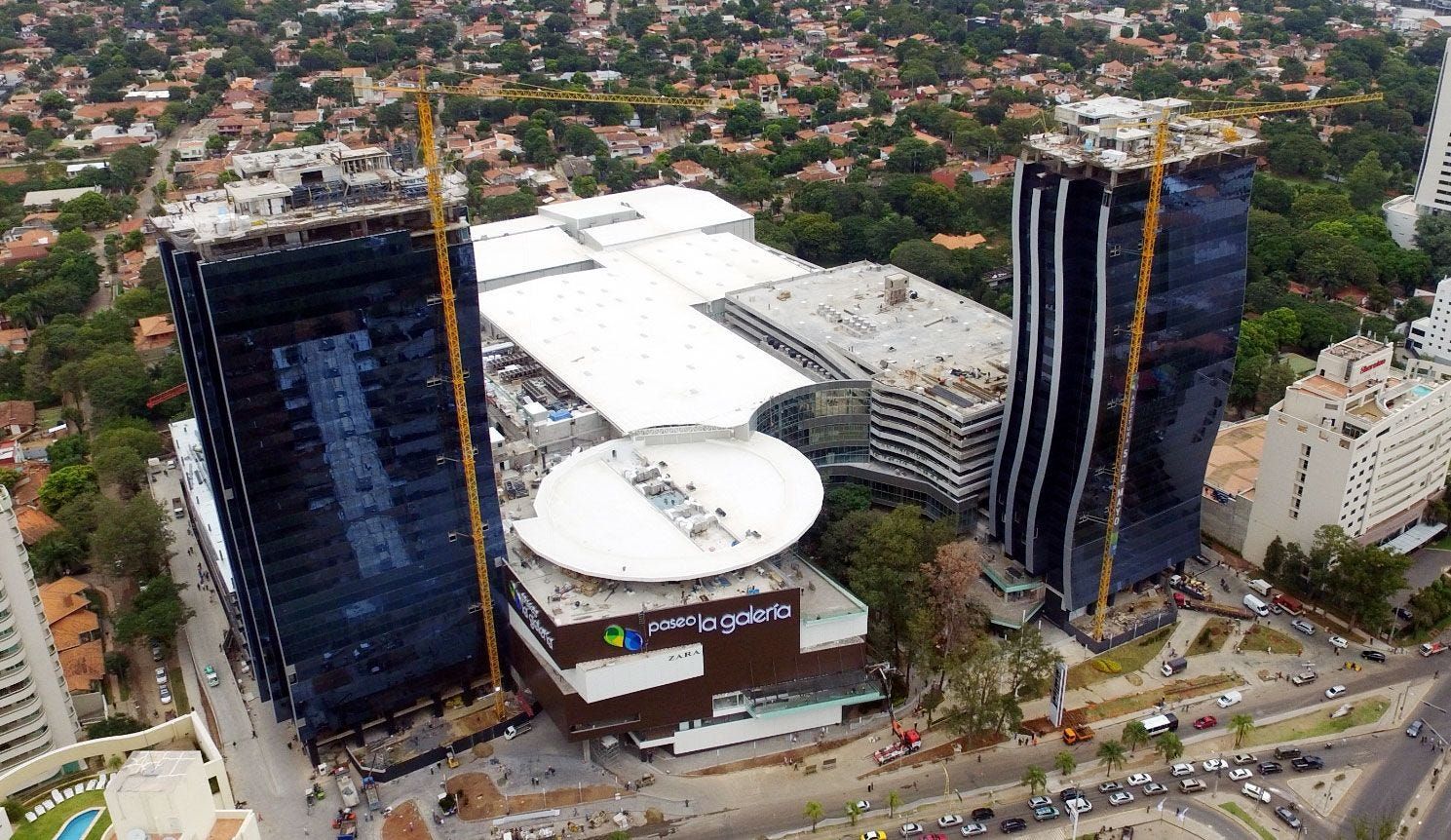
On the other hand, from the Paraguayan perspective, real estate prices are greatly inflating. The minimum wage in Paraguay is $350/month, and real estate prices are growing disproportionately compared to wage growth. Now, the $150,000 apartment is about 430x the minimum wage and growing.
In the last 20 years, there has been 50% more real estate and only 20% more population. That means that much of the real estate is for investment purposes only.
Political Status
For many years, Paraguay has had a stable, right-oriented policy. This is the reason for the predictable environment. The country is open for business, with low taxes and little regulation.
In general, Paraguay is a stable haven in the whole region of instability (Brazil and Argentina will depend on the success of Javier Milei). It is important to note that neighbouring countries, such as Brazil and Argentina, with a total population of 263 million people, are regions that focus primarily on Paraguay because of its political stability and affordable prices (Uruguay is more inflated compared to Paraguay). Many wealthy individuals from Argentina and Brazil "park" their money in Paraguayan real estate. This is the main driver of real estate in Paraguay.
Future for Real Estate
The purchasing power of Paraguayans is limited. Only the wealthy class can afford to buy a property in the best areas of Asunción. So what is the main driver? It is mainly because Argentinians 🇦🇷 and Brazilians 🇧🇷 "park" their money in real estate in Paraguay, as the country is considered stable in the whole region while cheap at the same time.
The main reason to buy real estate in Asunción for Argentines and Brazilians is to protect their capital in a safe place. It is not about the ROI of renting apartments, but about having a diversified and safe investment in a country that is very close to their homeland.
Safety of capital > return on capital
The main reason to buy real estate in Asunción is to protect capital. Generally speaking, real estate in Latin America is the number one asset because people tend to trust real estate more compared to other financial and investment instruments. Not many people know how the stock market works, and, in general, people do not trust local banks much 🏦. That is why people's main interest is in real estate.
Another reason driving the real estate market may be effective money laundering through the purchase of real estate.
Here are some thoughts on the real estate market for the future, what could happen from the investment perspective:
- The growing influx of European and U.S. expatriates to Paraguay will increase demand for real estate. On the other hand, there is still enough supply for the next few years. It seems that there will be a continuous growth of new properties to be built.
- Neighboring countries will continue to face challenges, and Paraguay, resp. Asunción, will benefit from the inflow of capital from Argentina and Brazil.
- Infrastructure, such as roads, bridges, and pipelines, needs to be built in Paraguay, which could contribute to better revaluation in the future. Infrastructure construction is not yet keeping pace with housing development.
- Another option is that Argentina will improve in the future with Javier Milei policies, and this will stop capital fleeing, and there will be less demand for real estate in Asunción, at least from Argentinians.
- A potential downside might be control of the foreign capital on the Paraguayan side. Regulating investments from other countries to prevent inflating house prices even further. Limits or some tax could be imposed on the amount of property foreign investors can buy.
In general, it all depends on Paraguay being stable and offering a stable environment in the region. In such a case, it will be positive in the long term, but it is important to keep in mind that real estate in Asunción will struggle with less liquidity when it comes to selling the apartment. It is not the best place to invest in real estate, but it is a country where you can diversify your investment.
Paraguay has many wealthy immigrants, and the trends seem stable in recent years. People fleeing regulations and socialism (Argentina, Brazil, Europe, Canada) and looking for more freedom in Paraguay. Normally, these groups are wealthier and are willing to spend or live off the money they earn outside the country. Another option is that these immigrants are planning to set up a business locally, live in Paraguay, and, in return, are looking for fewer taxes, stability, more freedom, and safety.
For Whom Is It Suitable?
It is not for everyone. It is for investors who want to diversify and look for where to park their money for a longer period of time. Another group could be those who live partially in Asunción, and the rest of the year they can rent the apartment. But I would not have high expectations in this case.
As I mentioned before, there is more supply than demand. Renting an apartment for short-term is crazy difficult (like Airbnb) because the city is not touristic and neither is it a business place. Many companies are based in larger cities in the region (Buenos Aires, São Paulo), and that means it's not easy to rent an apartment short-term. If so, then don't expect a high yield, and it will probably result in more work than earnings. In my opinion, not a great deal.
Most of the time, you can rent long-term to those who are willing to pay and stay in nice areas of Asunción, which narrows down the audience to foreigners.
So who might be the right person to invest in real estate in Asunción?
- People from neighboring countries (Argentines, Brazilians)
- Wealthy people from Latin America in general, due to little regulation
- Expats from Western countries to diversify their portfolio and eliminate the drawbacks of the Western world and have exposure in the world that is not tied to Western countries
- It can make sense together with the residence permit and have exposure in the local market in case of accumulating the necessary requirements for the path to citizenship—such as living in the country, having ties in the country, participating in the economic activity. In this case, it is more an investment into yourself, and the property won’t generate any yield as it probably will be used for your living.
Locations in Asunción
You have 3 main areas, and each of them has some specificities. Let's analyze them and decide which one can be the best option.
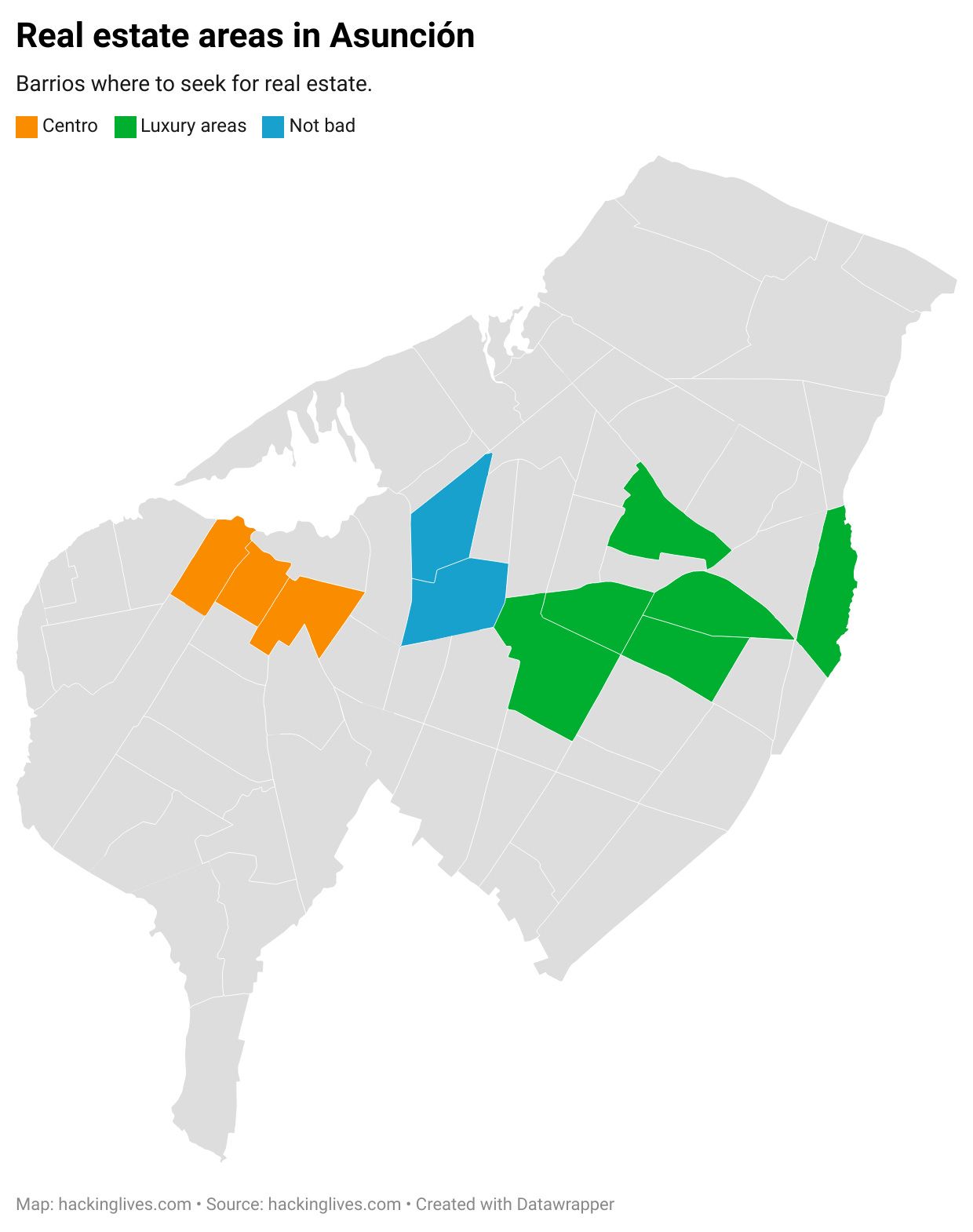
Luxury Areas
Neighborhoods such as Villa Morra, Recoleta, Ycuá Satí, San Cristobal, Ytai, Las Lomas...
These areas are where you can get the best apartments with a lot of amenities inside the building and around nice residential or business areas.
These are the best areas to look for an apartment. I would qualify it as a no-brainer.
El Centro
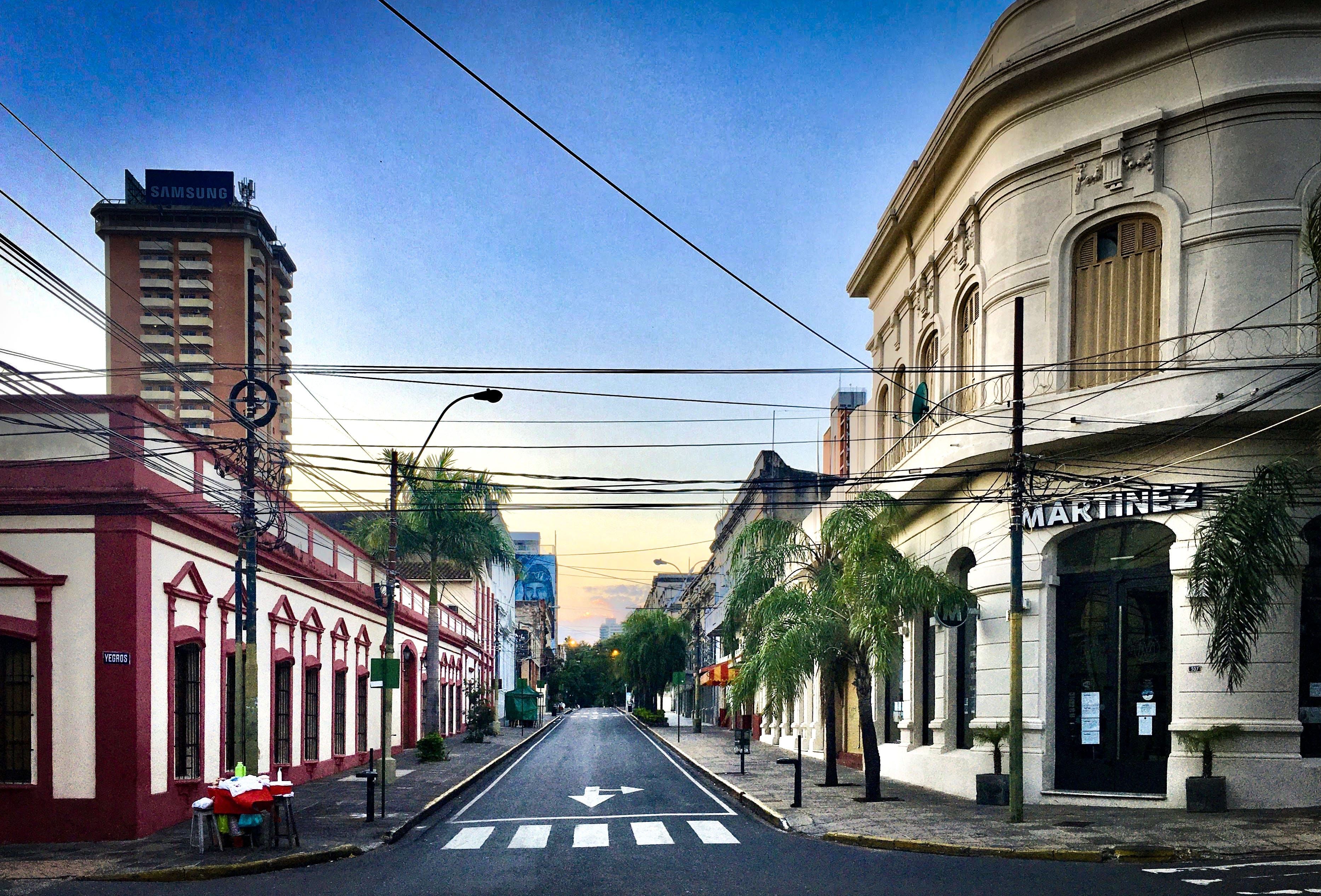
A very specific area. Government buildings, many government offices with some restaurants and bars. This area is very lively during weekdays and very quiet during weekends or holidays. It has more of a "Latin atmosphere" compared to the “luxury” areas, and you can feel a totally different energy in these downtown areas.
It is important to mention that wealthy people do not usually live in downtown. They want to live in residential areas in the "luxury areas" mentioned above.
However, the center has a specific vibe that might appeal to someone. From a real estate standpoint, there are not many "luxury" apartments, except for a couple of buildings in the area. Downtown has its own style and architecture, and if the country grows and gets richer, it may also affect downtown.
If my goal was to invest in several properties, I would choose one of them "in the center". I think this part of the city has huge potential in the future.
Not Bad
These two neighborhoods, Jara and Mariscal López, are somewhere between El Centro and "luxury areas". It is a mixed area, and it is nice to live there. It will surely develop more if the country keeps on the trajectory of becoming wealthier.
It is an intermediate area with a lot of potential. I would be looking for real estate very close to Av. España or Av. Brasilia. These streets are a great address and can "check the boxes" for “luxury” areas. Universities or Mburuvichá Roga are in this area.
Return on Investment
Let’s sum up what we know:
- Low purchasing power from locals
- Higher supply than demand
- Low liquidity (when selling the real estate)
Rental
The reality is that you can generate about 3-5% ROI on long-term rentals. Short-term rentals like Airbnb are not doing great, and there is too much competition. As mentioned above, Asunción is not a tourist city or business center, and that is why it is very difficult to have a high occupancy rate on Airbnb. Again, there is a huge supply and unmatched demand in the market.
Flipping Real Estate
I wouldn't focus on this. This could turn into a hassle. The poor liquidity of the market means you might have to wait a long time to sell a property. If your goal is to flip real estate, this is not the market to do so.
Numbers
What are the numbers when buying an apartment? Let's see in figures what the fixed costs are and what you stand to gain if you decide to rent your apartment on a long-term basis.
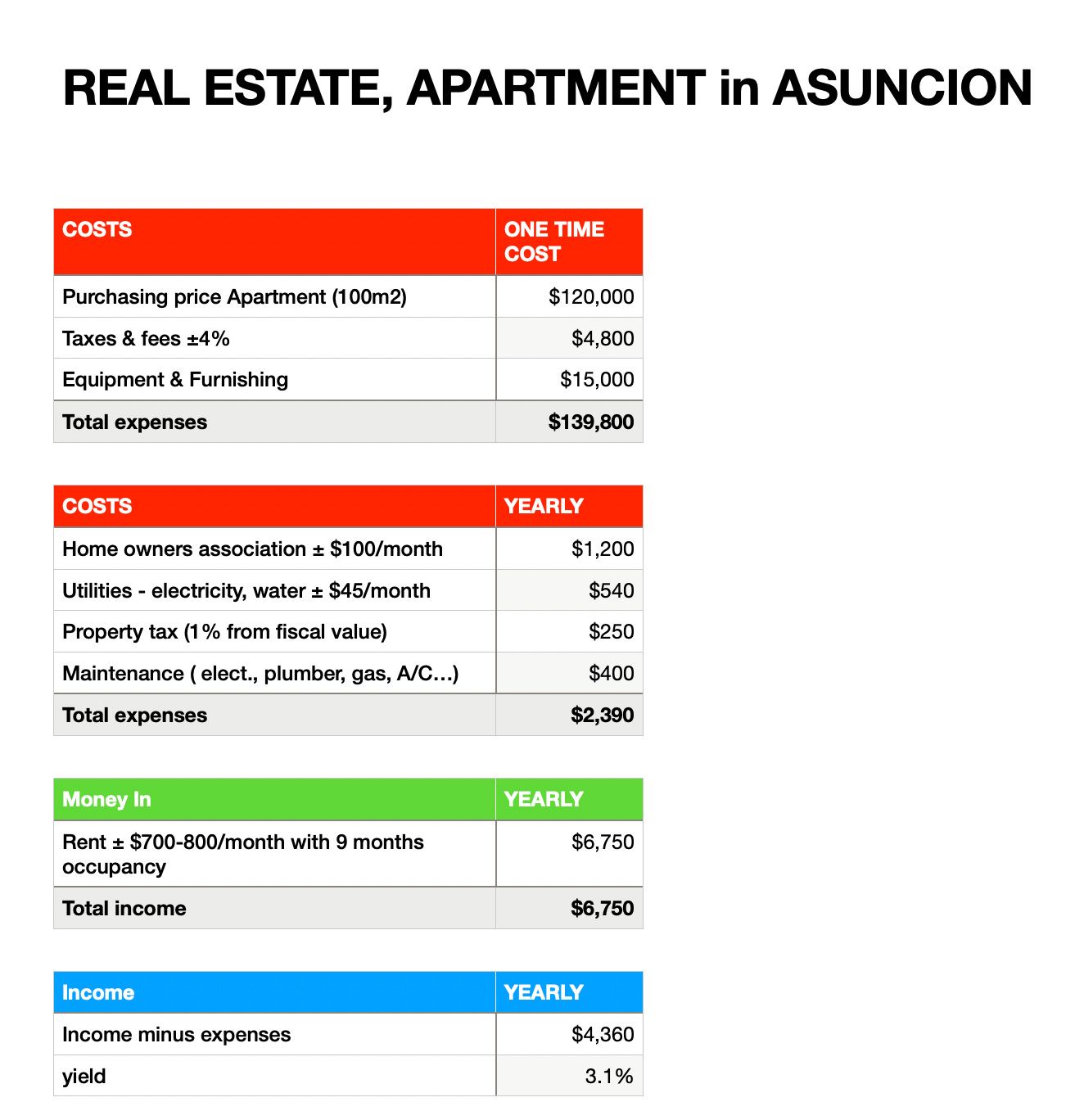
Financials for 100 sqm apartment
Real Estate Taxes
It is important to become a resident. It has tax advantages when buying or selling the property.
As a resident, you pay 10% of the rental income (if you rent).
In addition, the property tax is calculated based on the fiscal value of the property in a specific area, and the tax is 1% per year. Listed below are the fiscal value groups, and the property tax is calculated based on that.
Long story short, in case of an apartment with 100 sqm, you are aiming at around $250/year.
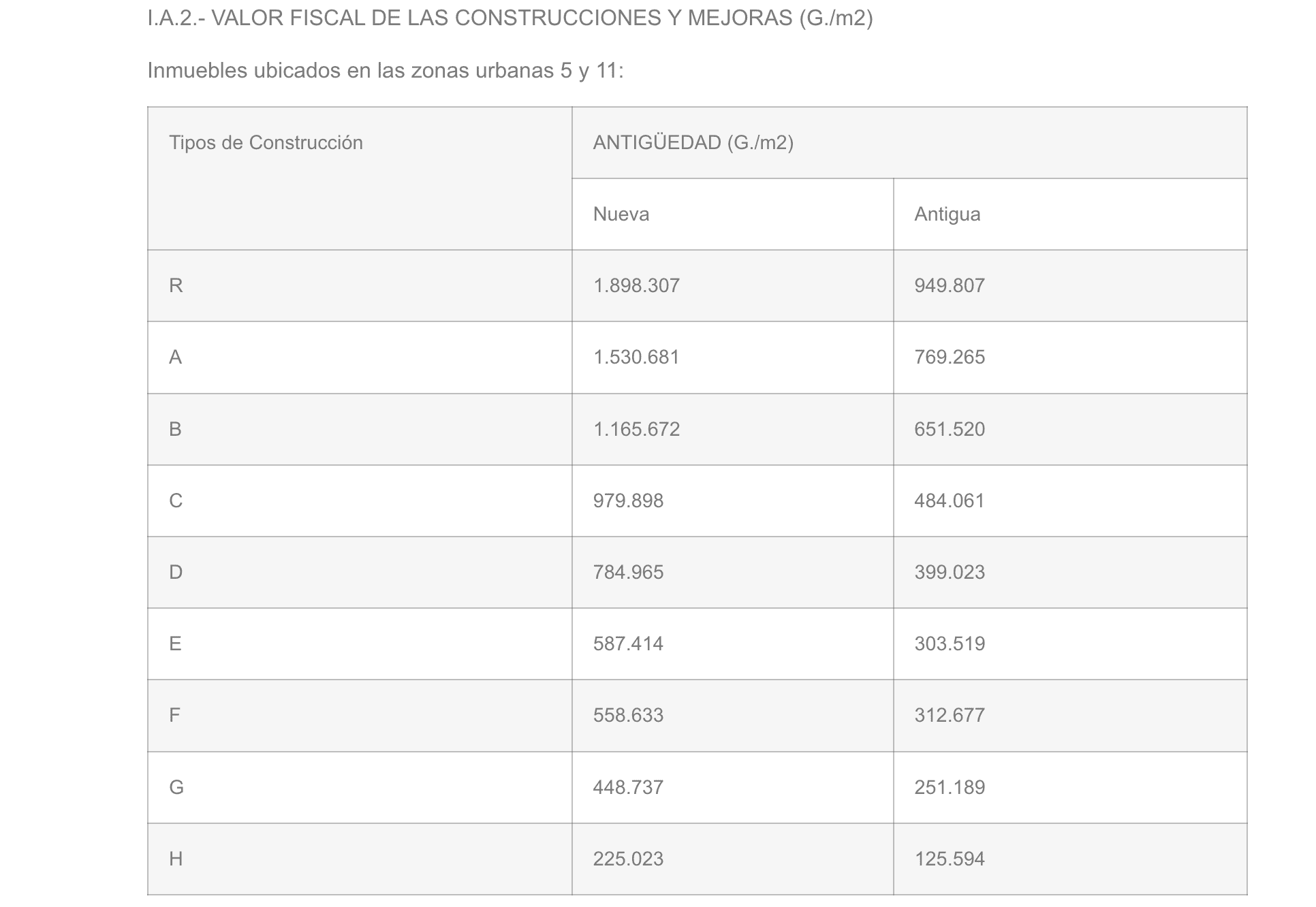
Fiscal value per square meter in Guaranís
Selling the Property
As a Paraguayan resident, you will pay 10% tax on the capital gain from the sale.
For non-residents, it is a different story, and non-residents have to pay 5% IVA plus another 15% income tax on 30% of the sales value. In case of selling the property in Paraguay, it is very prudent to become a resident.
How to Buy Real Estate
There are many options.
- One of the best options is to consult online sites where you can see many listings, especially in the capital city.
a. Infocasas
b. Ogapar
c. Remax
d. Yumblin
e. Century 21 - Hire a real estate agent to search for deals. That may be a good idea for some because many real estate offers are not published online. Some are (especially in Asunción), but outside of the capital, many offers do not appear online.
- Get down to work and look for real estate offers yourself (knowledge of the market and Spanish required).
Step by Step
- Do your research: Look for the property you like best. Basic orientation can be done online at the websites mentioned above.
- Find an agent: Real estate agents are a good way to help you through the process. Be careful and know who the agent represents—is the agent representing the seller or the buyer?
- Visit locations: Arrange with the agent to personally visit and view locations. The agent can process and make all steps easier for you.
- Get details: The contract should mention prices, due dates, deposits, fees, and how they will be divided between the buyer and seller. If you want to avoid problems, it may be a good idea to assume the fees on your side to avoid delays and payments on the seller's side. Agree to do a final physical check of the property before signing the contract to make sure that everything agreed upon is part of the property.
- Finish the deal: when all of the above is done, you complete the sale and final payment with the agent/attorney.
WRAP
Is it worth it? It depends. It might have a sense for you if:
- You look for diversification outside the Western world (Europe, US)
- You do not expect high yield
- You want to have ties with the country and “park” the money in Latin America
- You do not expect quick appreciation
- You want to pay in Bitcoin or cash